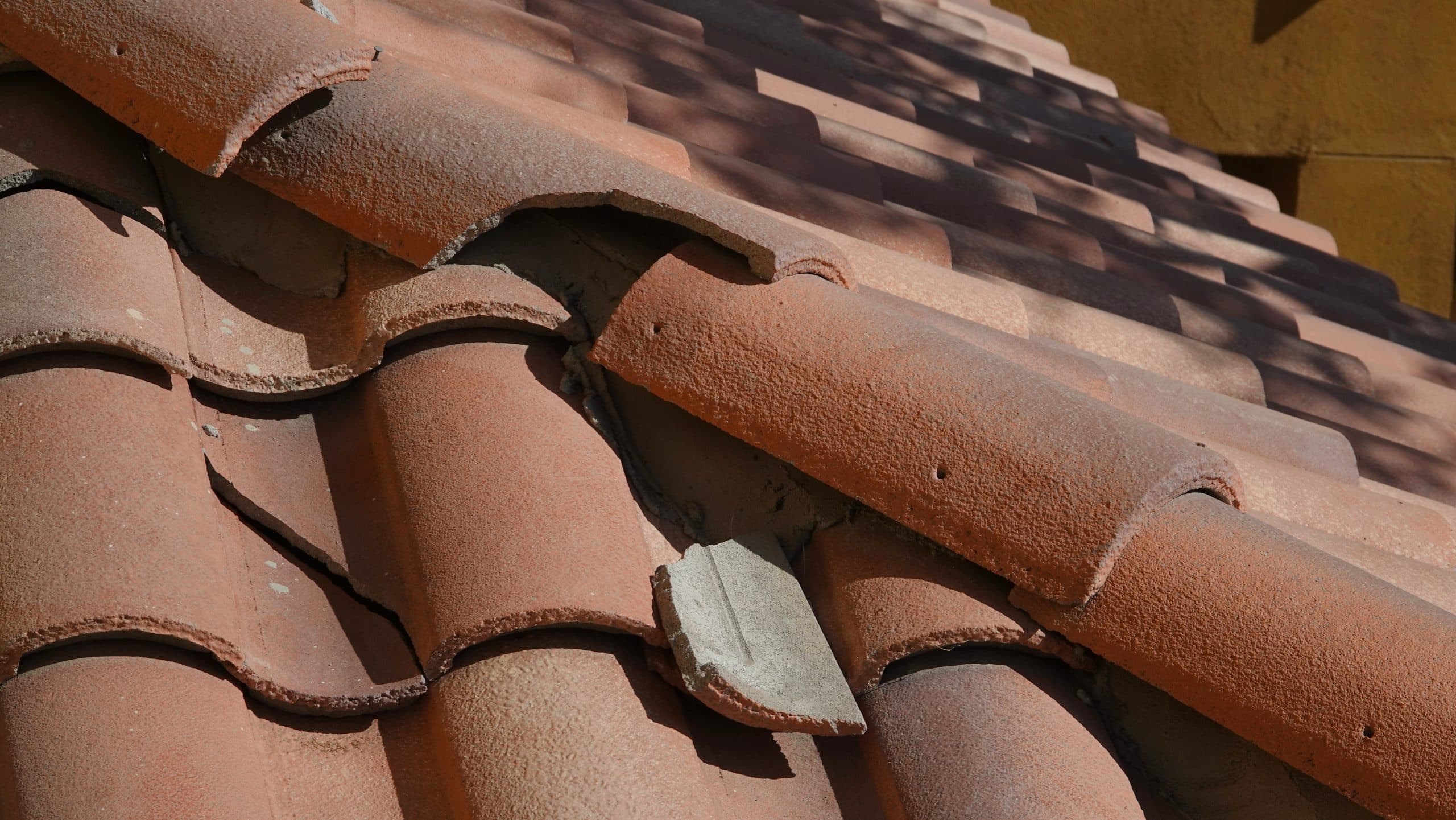
To assess roof damage after monsoon season, work from the ground up: walk the perimeter and look for cracked tiles, missing shingles, and debris along the roof edge; check the attic and ceilings for water stains and wet insulation; then book a professional inspection with a licensed roofer before the next storm. Do not get on the roof yourself — most homeowners who climb up after monsoon storms either get hurt or crack more tile than the storm did. Sundance Roofing & Painting has assessed monsoon roof damage across Chandler, Florence, and the wider Phoenix metro area for more than 20 years, and this guide walks the same order our crews use on every roof inspection.
Why Phoenix Monsoon Storms Damage a Roof Differently
A Phoenix monsoon is not normal rain. Between mid-June and the end of September, the Valley gets sudden storm cells, straight line winds, and dust storms — often inside the same hour. The National Weather Service Phoenix office notes that monsoon thunderstorm outflow winds regularly exceed 40 mph and can top 100 mph, which is what makes one storm cell so hard on a roof surface that spends the rest of the year baking under UV exposure.
That combination is the problem. Months of UV exposure make roofing materials brittle; then high winds and flying debris hit them at once. Tile that survived years of heat cracks under one impact. A shingle surface that lost its seal in July lifts in August. Because a significant monsoon cell can sit over one Chandler neighborhood and skip the next, a thorough inspection matters even when your street looks untouched.
- Straight line winds lift tile at the roof edge and leave missing shingles and exposed underlayment.
- Sudden downpours push wind driven rain sideways past flashing and into the decking.
- Airborne debris from trees and yards produces tile cracks and cracked shingles on impact.
- Dust and standing water clog valleys and drains, so the next storm turns a slow issue into an active leak.
What Most Homeowners Should Check from the Ground
Start outside, in daylight, the morning after the storm passes. Bring your phone for clear photos and walk the full perimeter of the house — all four sides, not just the side facing the street. You are looking for anything that changed since the last time you looked at the roof.
Do Not Get on the Roof Yourself
This is the one rule worth repeating. A monsoon-soaked roof deck is slick, and walking a concrete tile roof puts your full weight on pieces that are already stressed. Homeowners who get on the roof to check for monsoon damage routinely break more tile than the storm did, and that new damage is not covered. Assess from the ground, from a window, or from the attic — and leave the roof surface to a licensed roofer.
Common Signs of Monsoon Damage You Can See from Below
These are the common signs our inspectors find first after a Phoenix monsoon. Photograph anything on this list, and note the date the storm hit.
- Cracked tiles, or one tile that sits high, appears bent, or has slipped several feet down the slope.
- Loose or missing tiles leaving a strip of exposed underlayment along the eaves.
- Missing shingles, cracked shingles, or granules piling at the downspout.
- Branches or gravel resting on the roof after high winds.
- Ponding on flat roofs more than 48 hours after the rain stopped.
- Obvious holes or daylight coming through where the roof meets a wall or chimney.
Check Flashing, Valleys, and the Roof Edge
Most monsoon leaks do not start in the middle of the roof — they start at the seams. Check flashing anywhere the roof abuts something else: chimneys, skylights, wall junctions, and vents. From the ground with binoculars, look for metal that has lifted, pulled loose, or filled with debris. Valleys carry the most water during a heavy cell, so a blockage there is what turns normal rain into water intrusion later in monsoon season.
Inside the House: Water Stains and Attic Clues
Plenty of storm damage never shows up outside. Once you have finished the exterior walk, go inside and look up. A ceiling stain is often the first proof that the roof structure took a hit.
- Water stains on ceilings or wall stains near an exterior corner, especially brown rings that grow after each storm.
- Dark patches or bubbling on drywall where trapped water sits behind the paint.
- Damp insulation in the attic — press a gloved hand into the batts near the eaves; damp insulation means water got past the decking.
- Daylight coming through the sheathing when the attic light is off.
- A musty smell, which means materials trap moisture long after the storm.
Brown rings that are dry to the touch can be old. Rings that darken during the next storm mean water is still coming in. Either way, photograph them — detailed documentation of interior water stains is what separates an approved insurance claim from a denied one.
Assessing Tile Roofs, Shingles, and Flat Roofs After Monsoon Storms
Different roofing materials fail in different ways, so what counts as storm damage depends on what is over your head. Most Valley homes have a concrete tile roof, and tile roofs mislead homeowners more than any other system.
On tile roofs, the tile is a rain shield, not the waterproof layer — the underlayment beneath it is. That means a single cracked tile can let water reach the decking while the roof still looks perfect from the curb. It also means tile roofs can hide monsoon damage for a season before an active leak appears. Asphalt shingle roofs are more honest: wind damage shows as missing shingles or broken tabs you can spot immediately. Flat roofs, common on Phoenix-area additions and mid-century homes, need a check for standing water, blistering, and seams that opened under heat. Arizona roofs never carry heavy snow, so ponding — not weight — is what opens a flat roof up.
Rating Monsoon Roof Damage: Urgency at a Glance
Not every finding is an emergency, but a few are. Use this to sort what you photographed.
| What You Found | Likely Cause | How Fast to Act |
|---|---|---|
| Cracked tiles or a slipped tile | Impact debris or straight line winds | Within days — before the next storm |
| Missing shingles or exposed underlayment | High winds broke the seal | Within days |
| Granules or debris in gutters | Wear on the shingle surface | At the next professional inspection |
| Interior water stains, wet insulation | Water intrusion through flashing or tile cracks | Schedule now |
| Standing water on flat roofs | Blocked drainage after sudden downpours | Schedule now |
| Sagging decking or daylight coming through | Structural damage from a significant storm | Emergency — same day |
The pattern worth remembering: sudden storm damage caught early is usually a targeted repair. The same damage found next spring is often a roof replacement, because water had eight months to work on the roof structure, and hidden water damage compounds.
When Monsoon Damage Becomes an Insurance Claim
Most standard homeowners policies cover sudden storm damage — wind damage, impact from flying debris, hail — but not pre existing wear. That distinction is the whole game. Insurance adjusters are trained to separate one significant storm from ten years of UV exposure, so coverage varies by policy and by how well you documented the loss. This is general information, not insurance advice; confirm the specifics with your agent.
- Report the loss promptly and note the date of the storm.
- Submit clear photos of every cracked tile, missing shingle, and ceiling stain you found.
- Ask a licensed roofer for a written storm damage report with moisture readings — it carries far more weight than your photos alone.
- Keep receipts for any temporary work done to stop water intrusion.
Verify any contractor before you sign. The Arizona Registrar of Contractors maintains a public license search, and checking it takes about a minute — which is exactly why out-of-state crews knocking on doors after a storm would rather you skipped it.
Get a Free Inspection from a Licensed Roofer
A homeowner’s ground-level assessment finds the obvious. A licensed contractor up on the roof surface finds what is left: lifted flashing, hairline tile cracks, failed underlayment, and moisture in the decking that has not reached the ceiling yet. We offer free post storm inspections precisely because most monsoon damage is cheaper to fix than to ignore, and because a small repair now is not a full replacement in three years.
Our team documents everything in writing, explains what is sudden storm damage versus normal aging, and tells you plainly when the honest answer is that no roofing work is needed. If repairs are warranted, see our roof repair services, and if you are in Pinal County, our Florence roofing contractor page lists our license and coverage area.
Protecting the Roof Before the Next Storm
Monsoon season runs through September, so an August assessment usually means there is another round coming. Once repairs are done, clear the valleys and gutters so water has somewhere to go, trim branches that become flying debris, and have the flashing and roof edge checked before the next storm. Our guides on preparing your roof for monsoon season and what to do after monsoon roof damage cover the follow-up steps in detail.
Frequently Asked Questions
How soon after a storm should I assess the roof?
Within 24 to 48 hours, once conditions are safe. Early assessment matters for two reasons: an active leak spreads fast in an Arizona attic, and insurance claims are stronger when the damage is documented close to the date of the storm.
Can I tell if my tile roof is damaged without getting on the roof?
Often, yes. Cracked tiles, a tile that appears bent or slipped, and exposed underlayment at the roof edge are all visible from the ground with binoculars. What you cannot see is the underlayment condition beneath intact tile, which is why a professional inspection follows the ground check.
Does a cracked tile always mean a leak?
No. The underlayment underneath is the waterproof layer, so one cracked tile may not leak for months. It will eventually — UV exposure degrades exposed underlayment quickly in Phoenix — so replacing damaged tile early is a small repair rather than a large one.
Will insurance cover storm damage to my roof?
Usually, when the damage is sudden and storm-related rather than pre existing wear. Coverage varies by policy, so file promptly with detailed documentation and a written report from a licensed roofer.
What if I find no damage at all?
That is a good outcome and worth confirming. Many monsoon leaks start as hidden problems that show up months later, so a free inspection after a significant monsoon gives you a documented baseline for any future claim.
Free Post-Storm Roof Inspections Across the Phoenix Metro Area
If monsoon storms hit your neighborhood this season, do not wait for a ceiling stain to tell you. Sundance Roofing & Painting provides free post storm inspections across Chandler, Florence, Casa Grande, and the East Valley — owners on every job, Arizona License #329097, no upfront payment, and an A+ BBB rating. Request your free inspection and we will tell you honestly what the storm did and what it did not.
Keep Reading
More Advice for Arizona Homeowners



Ready When You Are
Get Your Free Estimate
Free estimate. No pressure. Owner on every job — and you don’t pay a dollar until you’re satisfied.
Call (602) 690-8879Get a Free, No-Pressure Quote
Tell us about your project.
Roofing or painting — we’ll call you back within 24 hours to schedule your free on-site estimate.