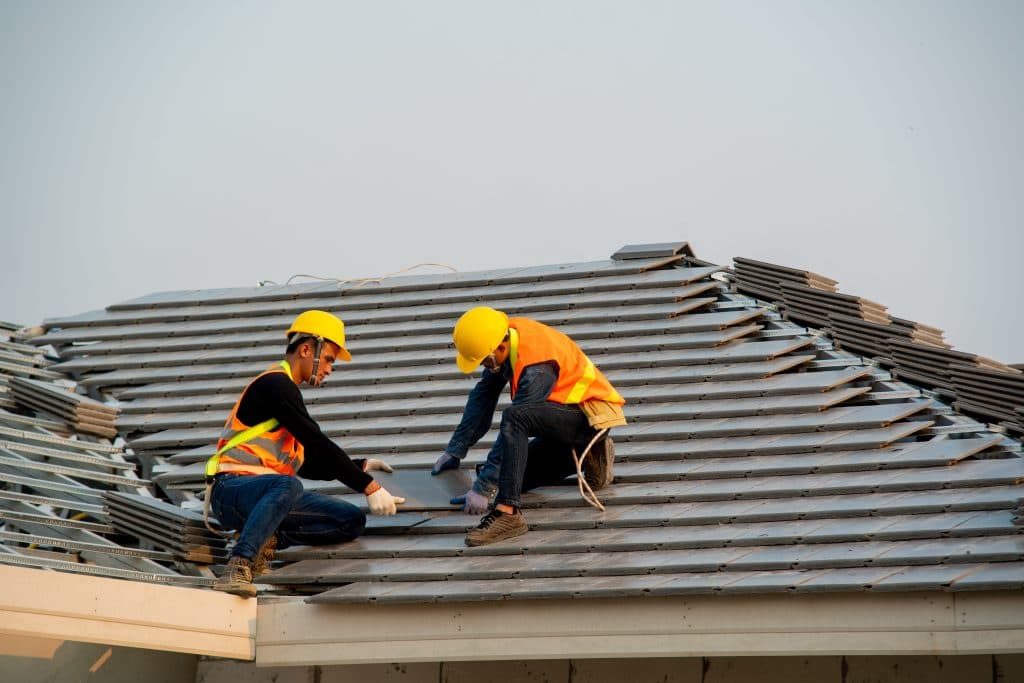
Most homeowners wait until a storm is in the forecast to think about the roof — but Arizona’s monsoon outflow winds usually arrive before the rain does. This guide walks through prep timing, how tile, shingle, and flat roofs fail differently, and what to document if a storm hits your home. Sundance Roofing & Painting has worked on Arizona roofs through more than 20 monsoon seasons, and the patterns below come from what we see every July.
Key Takeaways
- Arizona monsoon season officially runs June 15 through September 30.
- Outflow winds can hit 50+ mph before heavy rain arrives.
- Drainage, flashing, and attic ventilation fail more often than tiles.
- Pre-storm photos and post-storm documentation matter for repair and insurance decisions.
What Arizona Monsoon Season Actually Does to Your Roof
Arizona’s official monsoon season runs from June 15 through September 30 each year, a window the National Weather Service marks for a reason. Per NWS Phoenix Monsoon Awareness Week materials, the season delivers four threats together: damaging winds, torrential rain, frequent lightning, and dust storms. These do not always arrive politely in sequence. A single afternoon can stack all four onto the same Arizona roofing systems that sat quiet for nine months.
According to NWS Flagstaff, much of northern Arizona receives 40 to 50 percent of its annual precipitation during monsoon season, which compresses the entire year’s worst roof stress into a 14-week window.
The mistake most Arizona homeowners make is judging monsoon risk by annual rainfall totals. Phoenix only averages 2.43 inches of monsoon precipitation, which sounds manageable until you account for the intense storms and high winds that arrive ahead of the rain.
An outflow boundary is the gust front a thunderstorm pushes out in front of itself, and it carries dust, palm fronds, and flying debris into your flashing, edges, and roof penetrations before a single drop falls. A haboob (a wall of dust driven by that same outflow) and a microburst (a sudden, concentrated downburst of wind) can both hit a roof that looked fine the day before. That is why preparing your roof for monsoon season in Arizona is a calendar item, not a weather-forecast response.
Why Arizona Roofs Actually Fail During Monsoons (It’s Not Just Missing Tiles)
A quick scan from the driveway for missing shingles won’t tell you whether your roof is ready. Most monsoon leaks don’t start in the open field of shingles or tiles — they start at the small details that handle wind-driven rain, runoff volume, and humidity. Three systems carry that load.
Flashing, Penetrations, and Roof Edges
Flashing is the thin metal that seals the seams where the roof meets something else: a chimney, a skylight, a vent pipe, an HVAC curb, or a solar mount. Per FEMA’s flashing guidance, high winds can damage roof flashing and increase the risk of water intrusion and mold growth from wind-driven rain.
The mechanism is simple and brutal. Wind-driven rain finds the gaps your eyes miss, and a seal between a skylight and its flashing can stay intact for years until a 50 mph outflow gust drives rain horizontally under the lip. Loose flashing at vulnerable areas like valleys and edges is where most roof leaks begin. If a section of flashing looks loose, lifted, or stained, that is a roof repair call before June 15, not after.
Drainage and Runoff
The U.S. Department of Energy’s Building Science Education program notes that a few inches of rain on a typical roof can produce several thousand gallons of runoff, which is why drainage paths matter as much as the roof surface itself.
Downspouts and clogged gutters are the most common monsoon failure we find, and they are usually the cheapest one to prevent. When gutters fill with dust, palm debris, and shingle grit, the runoff has nowhere to go but over the edge and back against the fascia. Downspouts that terminate too close to the foundation send that water straight into the slab. On flat roofs and low slope roof systems, blocked scuppers and drains create ponding water that soaks the coating from above instead of running off. Proper drainage prevents costly repairs down the line.
Attic Ventilation and Moisture Buildup
A roof can survive a storm and still let your attic become a breeding ground for mold. Per the ENERGY STAR attic ventilation guide, a well-vented attic moves super-heated air out in summer and helps remove moisture from the assembly. When ventilation is blocked or undersized, monsoon humidity gets trapped under the deck and condenses on the underside, producing moisture buildup and dark staining even when no rain ever made it through the roofing surface. Proper attic insulation services paired with working vents protect against that hidden failure and reduce the risk of mold growth.
Your Pre-Monsoon Roof Prep Checklist
The right time to prepare your roof for monsoon season in Arizona is before monsoon season begins on June 15, not after the first outflow rolls through. Monsoon season preparation separates what most homeowners can safely do from the ground from what needs a licensed roofing contractor. If you are in our service areas and the pro-side items raise questions, that is what a free inspection is for.
Ground-Level Tasks Homeowners Can Do
- Clear gutters and downspouts of leaves, dust, and palm debris
- Trim overhanging branches from nearby trees and remove dead limbs near the roof
- Secure outdoor furniture, planters, and loose items before storms arrive
- Walk the ground line and photograph the roof from each side
- Check the attic with a flashlight for staining, daylight, or musty smells
- Confirm downspouts discharge at least 5 feet from the foundation, per DOE Building Science guidance on downspouts
- Assemble a basic emergency kit for power outages and flash flooding
Photograph each side of the home now, before any storm. If a microburst hits in July, you will have a clean before-image to compare against, which speeds up both repair scoping and any insurance conversation.
Tasks That Belong to a Licensed Roofing Contractor
Walking the surface of an Arizona tile or shingle roof in extreme heat is not a homeowner task. These belong to a qualified contractor with the training, footwear, and fall protection to do them safely:
- Walking the roof surface to inspect tiles, shingles, or coatings.
- Inspecting and re-sealing flashing at penetrations, valleys, and edges.
- Evaluating underlayment exposure on tile roofs.
- Checking ponding water and drain function on flat or foam roofs.
- Re-securing or replacing loose roofing materials before storm season.
- Inspecting flashing around HVAC systems, solar panels, and other penetrations.
If your last professional roof inspection was more than two monsoon seasons ago, request a free estimate and get a baseline before the storms begin. A roof inspection identifies weak points before Arizona monsoons test them.
How Prep Differs by Roof Type and Where You Live in Arizona
One checklist doesn’t fit every Arizona roof. Tile, asphalt shingle, and flat or foam roofs fail in different ways, and a homeowner in Phoenix faces a different precipitation reality than one in Payson or Flagstaff. The two tables below sort prep priorities by both axes.
Tile, Shingle, and Flat/Foam Roof Prep Priorities
| Roof Type | Top Monsoon Vulnerability | Pre-Storm Priority |
|---|---|---|
| Tile | Displaced or cracked tiles exposing underlayment | Inspect valleys, flashing, and any visible underlayment |
| Asphalt shingle | Missing or lifted shingles, edge details | Check edges, ridge, and re-secure loose materials |
| Flat or foam (low slope) | Ponding water, blistered coating, blocked drains | Clear drains and scuppers; check coating integrity |
Tile roofs hide a critical truth: the tiles aren’t what keeps water out — the underlayment beneath them does. A cracked or shifted tile that goes unnoticed for a full season can expose underlayment to UV and heavy rain it was never designed to handle, which is where most tile roof repair jobs start. On a flat or foam system, the prep question is whether water can leave the roof at all, which is why flat roof repair calls almost always involve drainage before coating.
Phoenix Metro vs. Northern Arizona
| Area | Avg. Monsoon Precipitation | What That Means for Prep |
|---|---|---|
| Phoenix | 2.43 inches | Wind, flashing, and dust priorities dominate |
| Tucson | 5.69 inches | Wind and drainage both matter |
| Payson | 7.09 inches | Drainage and runoff handling are first priorities |
| Flagstaff Airport | 7.68 inches | Drainage, runoff, and ventilation under wet conditions |
Phoenix gets 2.43 inches of monsoon rain on average; Flagstaff Airport averages 7.68 inches — the same checklist doesn’t serve both homeowners equally. Valley homeowners should focus on flashing, edges, and securing loose materials before wind events, because most Valley monsoon damage arrives as strong winds and dust storms. Northern Arizona homeowners face a heavier rainfall load and should prioritize gutter capacity, downspout discharge, and drainage paths first. If you own a cabin up north and live in the Valley, schedule a roofing contractor in Flagstaff to check it before June rather than after the first storm cycle.
Before and After the Storm: DIY, Pro, and How to Pick a Licensed Contractor
Pre-storm prep and post-storm response are two different jobs, and most guides collapse them into one. The matrix below separates them, so you know what to do in May versus what to do at 7 a.m. the morning after a microburst.
Pre-Storm vs. Post-Storm Action Matrix
| Action | Pre-Storm (Before June 15) | Post-Storm (Within 72 Hours) |
|---|---|---|
| Visual check | Photograph each side of the roof from the ground | Photograph any new damage, debris, or staining |
| Attic check | Look for existing staining, gaps, or moisture | Re-inspect for new staining or active drips |
| Documentation | File baseline photos for insurance reference | Take photos/videos before discarding damaged items (per FEMA) |
| Professional contact | Schedule a roof inspection if signs are present | Contact a licensed Arizona roofing contractor for assessment |
The single most common mistake after a storm is moving fast — homeowners haul wet drywall, ruined patio furniture, and broken tiles to the curb before anyone has documented what happened. That photo gap can shape an insurance outcome for the worse.
How to Verify a Licensed Arizona Roofing Contractor
Storm season brings storm chasers. Out-of-state crews show up after a microburst, knock doors, ask for money up front, and disappear before the first callback. The protection against that is licensing, and Arizona’s system has financial teeth.
According to the Arizona Registrar of Contractors, licensed residential contractors must post a cash deposit or surety bond of $4,250 to $100,000, which gives Arizona homeowners a financial recovery mechanism if work goes wrong.
Verify the ROC license number directly on roc.az.gov before you sign anything, confirm the bond status, and ask for the license number to be printed on the written estimate. Arizona also operates an ROC Recovery Fund that can compensate homeowners harmed by licensed contractors in specific situations, which is one more reason the license matters more than the truck’s signage. At Sundance Roofing & Painting, we carry Arizona License #329097, an A+ BBB rating, and owners on every job site, which is the same standard we ask homeowners to apply to anyone who knocks on the door in July.
Frequently Asked Questions
When does monsoon season start in Arizona?
Arizona’s monsoon season officially begins June 15 and runs through September 30 each year, per the National Weather Service.
The June 15 start date is a calendar marker, not a guarantee that storms begin that day. Some years the first real outflow arrives in early July; some years a dry June stretches well into the window. Use June 15 as your prep deadline, because any storm after that date counts as monsoon weather — and you don’t get to pick which week the first one lands.
Why should I inspect my roof before monsoon season instead of after the first storm?
Outflow winds of 50+ mph routinely arrive ahead of monsoon rain, so the first storm can already cause the damage you were planning to inspect for.
The sequence inside an Arizona monsoon storm is wind first, dust second, rain third. By the time water is falling, flashing has already been stressed and debris has already been thrown across the surface. A pre-season professional inspection finds loose materials, lifted edges, and aging flashing before they become leaks. If you have not had your roofing services in Arizona checked since last September, that is the first prep step.
What parts of a roof are most likely to fail during Arizona monsoons?
Flashing at penetrations, drainage components like downspouts and clogged gutters, and attic ventilation fail more often than the main tile or shingle field.
Wind-driven rain forces water sideways into seams that handle vertical rain just fine the rest of the year — skylights, vent stacks, chimneys, and HVAC curbs are the usual entry points. Drainage components fail when they clog with dust and debris from the dry months, and attic moisture builds up quietly under poor ventilation.
How do I prepare a tile roof for monsoon season in Arizona?
Have a roofing contractor check for displaced or cracked tiles, exposed underlayment in valleys, and flashing condition before June 15.
Tile roofs depend on the underlayment beneath the tiles to keep water out, not the tiles themselves. A shifted or broken tile that exposes underlayment to direct sun and rain shortens its life dramatically. Walking a tile roof safely requires the right equipment, so this is a pro task focused on valleys, flashing, and any visible underlayment.
How do I prepare a flat or foam roof for monsoon season?
Clear all drains and scuppers, check for ponding water, and inspect the coating for blisters or cracks before storms arrive.
Flat and foam roofs don’t shed water the way pitched roofs do, so drainage is the entire game. A blocked scupper turns a few inches of rain into standing water that soaks through coating defects you can’t see from the ground. Foam systems are also vulnerable to UV damage along seams where the topcoat has thinned.
What should I document after a monsoon storm if I think my roof was damaged?
Per FEMA, take photos and videos of damage before discarding any items after severe weather.
Insurance adjusters need visual evidence of the damaged state, not just the cleaned-up state, and a roofing contractor can quote a repair more accurately when they see what hit the roof and where. Walk the ground line, photograph each side of the roof, photograph the attic with a flashlight, and save everything in a dated folder before anything goes to the curb.
How do I know if a roofing contractor in Arizona is properly licensed?
Look up the contractor on roc.az.gov, confirm the license is active and bonded, and require the ROC number on the written estimate.
Arizona requires any business offering structural repair or improvement to hold a valid ROC license before submitting bids. The ROC website is free and public, and verification takes about two minutes. Sundance Roofing & Painting carries Arizona License #329097, and we put it on every estimate. If a contractor knocking your door after a storm can’t give you a number to check, that’s your answer.
Does Arizona monsoon roof prep differ between Phoenix and northern Arizona?
Yes — Phoenix averages 2.43 inches of monsoon rain while Flagstaff Airport averages 7.68 inches, so prep priorities shift accordingly.
Valley homeowners should weight prep toward wind, dust, and flashing, because most storm energy arrives as outflow rather than sustained rain. Northern Arizona homeowners get more than three times the rainfall load, so gutter capacity, downspout discharge, drainage paths, and attic ventilation move to the top of the list. Tucson sits between the two.
Keep Reading
More Advice for Arizona Homeowners



Ready When You Are
Get Your Free Estimate
Free estimate. No pressure. Owner on every job — and you don’t pay a dollar until you’re satisfied.
Call (602) 690-8879Get a Free, No-Pressure Quote
Tell us about your project.
Roofing or painting — we’ll call you back within 24 hours to schedule your free on-site estimate.