Two quotes for the same 20-square roof can land thousands apart — not because of the shingle brand, but because of what each roofing contractor includes in scope. Understanding roof replacement costs means looking past materials to the factors that affect the overall project: tear-off depth, deck repair, ventilation, and climate-driven upgrades. Sundance Roofing & Painting has spent 20+ years walking Arizona property owners through these line items with owner oversight on every project.
Key Takeaways
- Phoenix’s extreme cooling demand (measured by NOAA NCEI) makes roofing material choice a financial decision, not just an aesthetic one
- Roof pitch can triple labor costs as pitch steepness increases (Home Innovation Research Labs)
- Code often allows no more than one roof re-cover before requiring full replacement (NRCA)
- A cool roof upgrade pays off when the premium stays within federal energy-savings thresholds (DOE FEMP)
What Actually Changes a Roof Replacement Quote
Most homeowners compare the shingle line item when two estimates arrive. That’s the wrong line. Scope is what separates a $9,000 bid from a $15,000 bid on the same roof.
One estimate might include full tear-off, deck inspection, and upgraded flashing. The other might price an overlay with no ventilation work.
Here’s how the scope breaks down:
| Base Replacement | Scope Changers | Optional Upgrades |
|---|---|---|
| Field shingles and underlayment | Tear-off vs. overlay | Reflective/cool-roof products |
| Ridge cap and starter strip | Deck repair or re-sheating | Radiant barrier installation |
| Basic flashing at walls and pipes | Ventilation additions or upgrades | Enhanced drip-edge and flashing |
| Disposal of old materials | Permit and inspection fees | Extended warranty coverage |
| Standard drip edge | Code-required structural corrections | Upgraded ice-and-water shield |
Per National Roofing Contractors Association guidelines, local building codes often allow no more than one re-cover before a complete tear-off is required. That single rule can shift the total cost of a roofing project by thousands. Local regulations vary by jurisdiction, so verify requirements with your roofing contractor before choosing between tear-off and overlay.
Use this table when reviewing your next estimate. Place two bids side by side and check which scope changers each one includes. A lower overall cost on paper may simply mean fewer items in the scope.
Additional costs for deck repair, ventilation upgrades, or permit compliance can appear only after you compare the detailed breakdown of each bid. If you’re comparing bids for a roof replacement, match the line items before matching the price.
Roofing materials vary widely in cost and performance. Asphalt shingles remain the most common choice for residential roofing projects. Metal roofing offers durability and energy efficiency at a higher upfront roofing cost.
Other components like underlayment, flashing, and ventilation add to the final price but protect your investment long-term. The tear-off process itself adds labor and disposal fees that can represent 20-30% of the total project cost, especially when multiple layers need removal.
One of the biggest scope changers, roof pitch, deserves its own explanation. The cost difference is larger than most homeowners expect.
How Roof Pitch and Layout Affect the Price
According to a Home Innovation Research Labs retrofit cost study, reroof labor rises from about $1 per square foot on a 4:12 pitch to $3 per square foot on a 12:12 pitch.
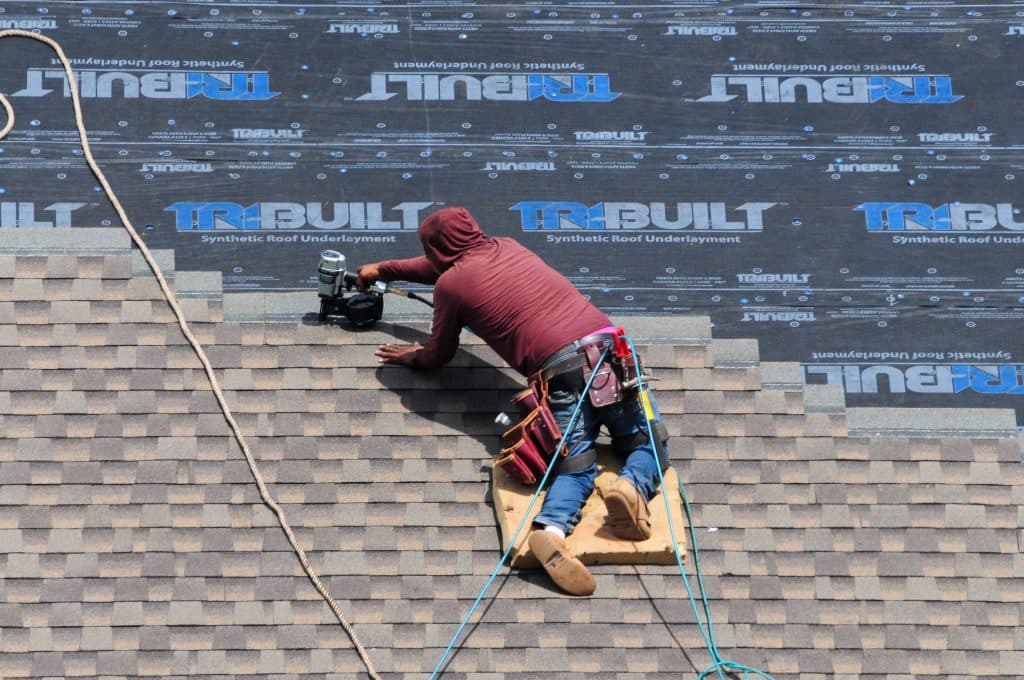
That’s not a rounding error. Steep pitches require harnesses, toe boards, and staged material delivery that slow installation speed by half or more. A crew that completes 15 roofing squares per day on a walkable roof may finish only 6 or 7 on a steep pitch.
The labor costs scale accordingly, and safety equipment adds to the bid. Roof slope directly affects how much time and equipment your contractor needs to complete the work safely.
Pitch isn’t the only complexity factor. These layout features also increase square footage of waste, time, and difficulty:
- Valleys and hip lines requiring precision cuts
- Multiple dormers with individual flashing details
- Skylights or chimneys needing custom flashing cuts
- Limited equipment access from narrow lots or landscaping
Contractors typically add 10-15% for material waste on cut-up roofs (per Owens Corning). That waste factor alone can add hundreds to the roofing materials line on a complex layout. Roof complexity increases when your home has multiple levels, angles, or penetrations that require more materials and labor per 100 square feet of coverage.
Your roofing services estimate should reflect these realities, not hide them.
Pitch is a fixed feature of your home. Climate and storm exposure, on the other hand, create cost variables you can actually make decisions about.
When Arizona Heat and Storms Should Change Your Budget
In a metro that logs 4,704 annual cooling degree days (NOAA NCEI), the type of roof you choose affects your energy bills for decades. According to DOE FEMP cool roof purchasing guidance, an ENERGY STAR-qualified cool roof saves money when it costs no more than $0.64 per square foot above a less efficient option. The best available model can save up to $1.11 per square foot in lifetime energy costs.
That threshold gives you a concrete way to evaluate whether a higher upfront cost for reflective products is justified or whether a contractor is increasing costs without delivering long-term performance value.
Arizona’s storm exposure adds another layer. NOAA storm event records for Maricopa County logged hail up to 1.75 inches near Scottsdale Municipal on September 26, 2025, with multiple 1-inch reports across Phoenix.
Post-storm inspections can uncover cracked tiles, compromised underlayment, and moisture damage that change replacement scope and urgency. Insurance coverage may apply, but only if the damage is documented before a new roof goes on. Proper inspection helps prevent leaks and protects your home from hidden water damage.
A metal roof replacement or reflective tile option pairs well with attic insulation services to maximize long-term value in Arizona’s climate. Metal roofing delivers energy efficiency and durability compared to standard asphalt shingles, making it a smart choice for homeowners planning to stay in their homes long-term.
Are cool-roof upgrades always worth it?
Not universally. The DOE notes cool roofs deliver the greatest cooling savings in hot climates but can increase energy costs in colder regions. In Arizona, the math favors reflective products for most homeowners.
Storm damage and code limits also determine a fundamental early decision: whether to tear off, overlay, or upgrade the full roofing system.
Tear-Off, Overlay, or Upgraded Replacement: How to Decide
| Criteria | Overlay (Re-cover) | Full Tear-Off | Upgraded Replacement |
|---|---|---|---|
| Code eligibility | One layer max in most jurisdictions | Always code-compliant | Always code-compliant |
| Hidden damage inspection | No deck visibility | Full deck and flashing inspection | Full deck and flashing inspection |
| Lifecycle value | Lowest upfront, shortest expected life | Standard lifecycle for the material | Highest upfront, best long-term durability |
| Best fit scenario | Budget-limited, current roof in good condition | Standard replacement, any roof condition | Hot climates, long ownership horizon |
The cheapest option on this table is not always the most cost-effective. An overlay skips the roof removal step, saving on labor and dumpster rental. But it also skips the one chance to inspect the deck for rot, moisture damage, or deteriorated flashing.
If the existing roof already has one layer, building codes in most Arizona jurisdictions require a full tear-off regardless. Cutting corners on inspection now can lead to expensive repairs later when hidden damage spreads.
Upgraded replacement makes the most financial sense when you plan to stay in the home long enough for energy savings to offset the premium. In Arizona’s climate, that payback window is shorter than in moderate regions because cooling loads drive a larger share of annual utility costs. Reduced maintenance requirements and improved curb appeal add value beyond energy savings alone.
For homeowners whose current roof needs targeted fixes rather than full replacement, roof repair may be the right first step. When full roofing installation is the path forward, an asphalt shingle roof replacement remains the most common and cost-effective option for walkable-pitch homes.
Not all asphalt shingles are created equal. Material grade, warranty coverage, and installation quality all affect the overall value of your new roof.
Frequently Asked Questions
What factors affect the cost of a roof replacement?
Roof size, pitch, tear-off scope, deck condition, material type, ventilation, code compliance, and regional climate all change the final cost of a roof replacement.
The key factors fall into two categories. Base-price drivers include roof size in square footage, material selection, and standard labor. Scope additions include tear-off versus overlay, deck repair, ventilation upgrades, permit fees, and code-required corrections.
A roof replacement cost that looks high on paper may simply reflect a more complete scope rather than inflated pricing. Other factors like access difficulty, waste disposal fees, and seasonal demand can also affect the overall project cost.
Why are quotes for the same roof so far apart?
Quotes differ mostly because of what each roofing contractor includes in the scope, not because one is overcharging.
A professional roofing contractor carrying Arizona licensure pays for bonds ranging from $4,250 to $100,000 depending on license class, plus contributions to the state Recovery Fund. Those compliance costs are real overhead that unlicensed operators skip entirely. Roofing companies that include full tear-off, deck inspection, and code-compliant ventilation will always bid higher than those pricing a surface overlay.
Sundance Roofing & Painting requires no upfront payment and keeps an owner on-site so homeowners can walk through every scope item on their roof replacement service estimate.
Can roof replacement costs go up after the tear-off?
Yes, hidden deck rot, moisture damage, or deteriorated flashing often appear only after the old roof is removed.
Unexpected expenses from concealed damage are the most common reason a roof replacement process exceeds the original estimate. A transparent estimate addresses this upfront with “allowance” or “contingency” language that sets a per-sheet price for deck repair before work begins.
If your estimate has no contingency line, ask why. That missing detail is a red flag, not a savings.
Is labor or materials the bigger part of a roof quote?
The balance depends on roof pitch, access difficulty, and material choice, but labor often represents the larger share on steep or complex roofs.
On a walkable 4:12 pitch, materials and labor costs may split close to evenly. On steep roofs requiring harnesses and staged delivery, labor’s share grows because safety setup and slower installation speed compound across every roofing square. A detailed estimate should break these two categories apart so you can see exactly where your money goes.
Are cool-roof upgrades worth the higher price in Arizona?
In Arizona’s extreme heat, cool-roof products typically pay for themselves when the upfront premium stays within federal energy-savings thresholds.
The DOE reports that radiant barriers alone can reduce cooling costs by 5-10% in warm, sunny climates. Combined with a reflective roofing surface, the savings compound over the roof’s life. A tile roof replacement is one of the most common reflective options in Arizona because concrete and clay tiles naturally reflect more solar energy than standard asphalt.
The key is confirming the upgrade premium stays reasonable relative to your energy bills and ownership timeline. A quality roof should deliver measurable energy savings, not just aesthetic improvement.
Is it cheaper to overlay a new roof instead of tearing off the old one?
Overlaying can cost less upfront, but code limits and hidden damage risks often make a full tear-off the more cost-effective long-term choice.
An overlay avoids roof removal labor and dumpster fees, which can save money in the short term.
The tradeoff is significant. Inspectors and insurers may not accept claims on roofs with multiple layers, and minor roof damage hidden beneath the old roof will continue to worsen. Understanding how long asphalt roof shingles last helps you weigh whether the remaining life of an overlay justifies skipping a full inspection.
What should a roofing estimate include?
A complete roofing estimate should itemize tear-off, disposal, materials, flashing, ventilation, deck repair allowances, permit fees, and warranty terms.
Treat that list as a checklist when reviewing any bid. If a line item is missing, the contractor either excluded it from scope or bundled it into a lump sum you can’t verify. Either way, ask.
Sundance Roofing & Painting provides a free estimate with owner oversight so homeowners can walk through each line item before signing. For more answers, visit our common roofing questions page or request a free estimate to budget effectively for your project.
Keep Reading
More Advice for Arizona Homeowners
Ready When You Are
Get Your Free Estimate
Free estimate. No pressure. Owner on every job — and you don’t pay a dollar until you’re satisfied.
Call (602) 690-8879Get a Free, No-Pressure Quote
Tell us about your project.
Roofing or painting — we’ll call you back within 24 hours to schedule your free on-site estimate.