Most Arizona roofs that fail during a monsoon storm were showing warning signs months earlier — and often the first signs appear inside the home before anything looks wrong outside. This guide walks through the warning signs that matter, which ones can wait, and what to do before the next storm hits your roof.
Key Takeaways
- Northern Arizona gets up to half its yearly rain during monsoon season, so small roof weaknesses become urgent fast.
- Monsoon downbursts have produced winds over 100 mph; even a 64 mph gust during the August 2024 Phoenix storm caused documented roof damage.
- Interior water stains are time-sensitive: federal guidance says wet materials must dry within 24 to 48 hours to prevent mold.
- Some warning signs need same-week emergency action; others justify a scheduled inspection — knowing the difference saves money.
- After storms, Arizona consumer-protection officials warn about door-to-door repair scams, so always verify the license and get a written contract.
Why Arizona Storm Season Changes the Roof Risk Calculation
Arizona monsoon season runs from June 15 through September 30, and that window concentrates a disproportionate share of the year’s weather stress on a residential roof. A small flashing lift or a few loose tiles that would sit harmlessly through a mild April can become an active leak within hours of the first severe storms.
According to northern Arizona monsoon data from the National Weather Service, much of northern Arizona receives 40% to 50% of its annual precipitation during monsoon season. This timing turns small pre-season roof vulnerabilities into urgent failure points once the pattern sets in.
Wind, not just rain, is often the immediate trigger for roof failure here. Per the National Weather Service, monsoon thunderstorm winds can exceed 100 mph, and on August 22, 2024, NWS Phoenix recorded a 64 mph peak gust during a metro storm with documented roof damage in Scottsdale. A downburst — a sudden, localized column of sinking air that hits the ground and spreads outward — can lift shingles or shift tiles in seconds across the service areas we cover throughout Maricopa and Pinal Counties.
Wind-driven rain can force water through vulnerable areas that stay dry during calmer months, finding weaknesses in flashing and underlayment. Storm damage often starts small but accelerates once the monsoon pattern sets in. That’s why the warning signs you spot in May matter more than the ones you spot in October.
Warning Signs You Can Spot From the Ground
Checklist: Pre-Storm Ground-Level Inspection
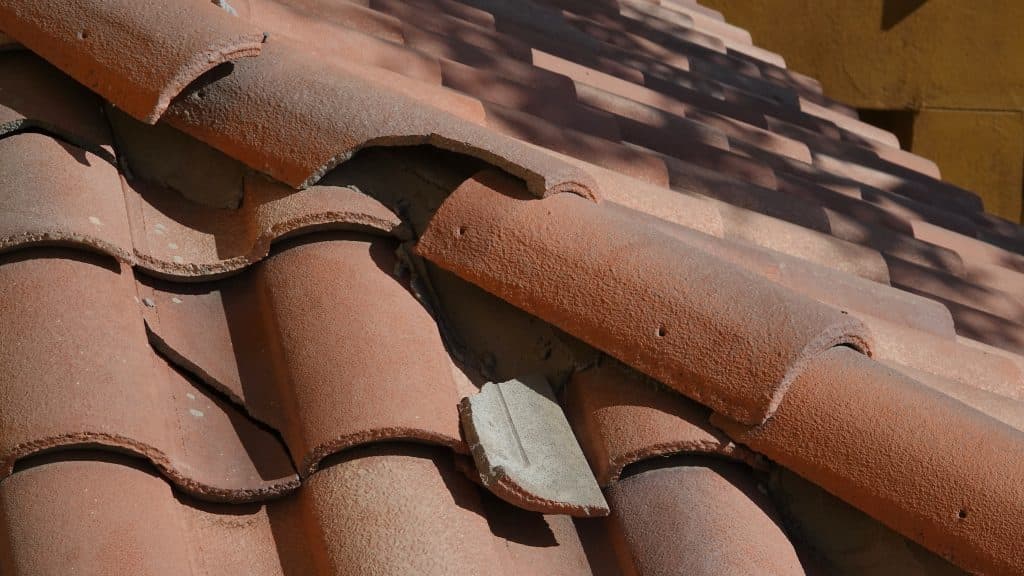
- Missing shingles, cracked tiles, or visibly displaced roofing materials, especially after recent high winds.
- Protective granules collecting in gutters or at downspout outlets — a sign that asphalt shingles are losing their UV protection to sun and wind.
- Bald spots or shiny patches on shingles visible from a window or driveway.
- Damaged or lifted flashing around chimneys, skylights, or where the roof meets a wall (flashing is the metal strip that seals these joints).
- A sagging roofline visible from the curb, which signals structural damage and should never wait.
- Debris caught in roof valleys, around vents, or at penetrations after a wind event.
In Arizona specifically, tile slippage and UV-aged granule loss show up far more often than the generic “missing shingles after a wind storm” symptom most national checklists describe. Tiles can slide out of position without breaking, and asphalt shingles age faster under desert sun than they do anywhere east of the Rockies.
When to Use Binoculars Instead of a Ladder
A storm-damaged roof may have weak spots that won’t hold a person’s weight, and walking it before an inspection is a serious safety risk. Use binoculars or a smartphone zoom from the ground, photograph anything that looks off, and let a professional confirm what you’re seeing. Sundance offers a free inspection with no upfront commitment, and our roof repair services start with that on-site assessment so homeowners aren’t guessing about what’s safe to climb.
Indoor Warning Signs That Demand Faster Action Than You Think
A faint brown ring on a ceiling, a musty smell in a closet, or peeling paint near a corner often appears before any visible roof damage. The instinct is to wait and see whether it gets worse — and that instinct is wrong, because of how fast moisture in building materials turns into mold growth.
Hidden damage in attic spaces and wall cavities can spread for weeks before becoming visible, and a professional roof inspection catches the source before the interior damage spreads.
Per EPA guidance on water damage, clean-water damage from roof leaks should be addressed within 24 to 48 hours to help prevent mold growth in drywall, insulation, and ceiling materials.
Walk the upstairs rooms, attic access points, and exterior wall corners, and look for these signs:
- Brown or yellow water stains on ceilings or walls, which usually mean an active or recent roof leak.
- Peeling paint or bubbling drywall near the ceiling line.
- A musty smell in upstairs rooms, closets, or near the attic hatch.
- Damp insulation visible from the attic hatch (do not enter the attic if you suspect structural damage).
- Visible daylight through the roof boards when looking up into the attic.
- Sagging spots on the ceiling — an emergency signal that means everyone should stay out of the room below.
Water stains on ceilings after rain are rarely where the actual leak is. Water tracks along framing and insulation before it shows up as a stain, which is why the next question matters more than the first: how urgent is what you’re seeing? Left unaddressed, small leaks penetrate deeper into wall cavities and structural framing, weakening roof decking and framing members within days.
Severity Triage: Which Signs Need Emergency Repair vs. an Inspection
Not every warning sign is an emergency, and treating them all the same way either wastes money on rush work or risks a structural failure during the next storm. The triage below sorts the most common Arizona roof signs by what’s actually driving the urgency. Knowing which roof needs emergency repair versus a scheduled inspection prevents costly repairs down the line.
| Warning Sign | Likely Cause | Urgency | Next Step |
|---|---|---|---|
| Active leak or water stain spreading | Roof penetration breach or failed flashing | Emergency — same week | Document with photos, place a container, schedule inspection now |
| Sagging roofline or ceiling sag | Structural issues; deck damage | Emergency — same day | Avoid the area below; call for an inspection immediately |
| Missing or displaced shingles/tiles after a major storm | Wind damage exceeding shingle wind rating | High — within days | Document with photos, schedule professional roof inspection |
| Granule loss in gutters, bald spots on shingles | UV damage, accelerated wear | Monitor — inspection within 30 days | Note location, request inspection before next storm hits |
| Lifted or damaged flashing | Wind lift, thermal cycling | High — within 1 to 2 weeks | Schedule inspection before heavy rain |
| Musty attic smell, damp insulation | Slow leak or condensation, possible mold | High — within 1 week | Schedule inspection; per EPA, address moisture within 24 to 48 hours |
The line between emergency and monitor isn’t really about how dramatic a sign looks from the ground. It comes down to three things: whether water is actively entering the home, whether structural elements like the deck or rafters are compromised, and whether the next storm will turn a stable problem into a failure. A cracked tile in March and a cracked tile in early July carry very different risk weights for that reason. When the answer to any of those questions is yes — or you’re unsure — schedule a professional roof inspection rather than guess.
Understanding what your roof needs before storm season arrives helps prevent leaks and protects your home’s structural integrity before minor problems require a full replacement. Catching issues early through regular inspections addresses roof needs before they escalate.
Once a storm has already hit, the playbook shifts from watching for signs to documenting damage and avoiding the wave of bad actors that follows every monsoon.
What To Do After Storm Damage (And How to Avoid Repair Scams)
Per FEMA guidance, homeowners do not need to wait for an inspection or insurance approval to begin cleanup and emergency repairs after a storm. Active water intrusion, wet electrical components, and saturated materials need immediate attention, and delaying repairs often makes the damage worse and the claim harder.
Use this checklist in the first 24 to 48 hours after storm damage:
- Photograph all visible damage from safe, ground-level vantage points.
- Note the storm date and any weather alerts issued for your area.
- Place containers under active leaks and move belongings to dry areas.
- Contact your insurance provider to report the incident.
- Get at least three written estimates before authorizing major repairs.
- Verify any contractor through the Arizona Registrar of Contractors before signing.
Per an Arizona Attorney General consumer alert, fraudulent contractors regularly go door-to-door after Arizona storms. In October 2025, the AG’s office reported a case involving 9 victims and approximately $75,000 in unfinished projects. The Federal Trade Commission and Arizona AG both advise homeowners to require written contracts, request proof of insurance, and verify state licensure before any work begins.
Sundance Roofing & Painting operates under Arizona License #329097, requires no upfront payment, and provides honest recommendations before any work starts. Any Arizona contractor’s license can be verified through the Arizona Registrar of Contractors at roc.az.gov. Our expert team handles post-storm assessments with the same care we bring to every project, and homeowners who want a free post-storm assessment can request an estimate directly.
Frequently Asked Questions
What are the warning signs your roof needs repair before storm season?
The main signs are missing or cracked shingles, lifted flashing, granules in gutters, water stains on ceilings, and any sagging in the roofline.
Before Arizona monsoon season, check outside for missing shingles or displaced tiles, granules collecting in gutters, damaged flashing around chimneys or skylights, and any sagging roofline. Inside the home, look for water stains, peeling paint, or musty smells near the attic. Sundance Roofing & Painting offers free pre-storm roof inspections so most homeowners can address small issues before they turn into urgent repairs.
Can a small ceiling stain mean roof damage?
Yes — even a faint stain often means active or recent water intrusion that needs prompt attention to prevent mold.
A small ceiling stain almost always means water has reached your drywall through a roof penetration somewhere above. Federal guidance recommends addressing wet materials within 24 to 48 hours to help prevent mold growth, and the actual leak point is often hidden well away from the visible stain. A professional inspection finds the source before damage spreads to insulation and structural elements.
Do granules in gutters mean you need roof repair?
Some granule loss is normal as asphalt shingles age, but heavy accumulation signals the shingles are losing UV protection.
Granules are the colored coating that protects asphalt shingles from sun damage. A handful in the gutter once a year is normal, especially with older shingles. Large piles or bald spots visible on the roof mean the shingles can no longer protect the underlayer from UV rays and heavy rain. It isn’t always an emergency, but it justifies a roof inspection before the next storm season arrives.
Should you get a roof inspection after a storm even if you don’t see leaks?
Yes — wind and hail damage often does not produce immediate leaks but accelerates failure during the next storm.
Wind can lift shingles or flashing without breaking them, leaving the roof vulnerable to the next storm. Hail can bruise shingles in ways that show no leak initially but shorten the roof’s life. Even moderate Arizona storms can compromise roofs that still look fine from ground level. Our roofing services include free post-storm inspections to assess what needs repair and prevent future leaks.
How do I know if storm damage is serious or cosmetic?
Active leaks, sagging, damp insulation, or visible structural shifting are serious; isolated cracked tiles or surface scuffs are often cosmetic.
Serious signs include water actively entering the home, a sagging roofline, soft spots in the ceiling, wet attic insulation, or anything affecting electrical components. Cosmetic damage like a single cracked tile or surface scuffing can usually be monitored and scheduled. When uncertain, photograph everything from ground level and request a professional roof inspection rather than guessing at the severity yourself.
How do I avoid storm repair scams after bad weather?
Verify the contractor’s Arizona license, require a written contract and proof of insurance, and get at least three estimates before signing.
After Arizona storms, the state Attorney General regularly warns about door-to-door contractors who collect deposits and disappear. Always verify any contractor through the Arizona Registrar of Contractors, get multiple written estimates, require proof of insurance, and avoid paying upfront. Sundance Roofing & Painting operates under Arizona License #329097 and never requires upfront payment.
When is it too risky to wait on roof repair?
Wait stops being an option when water is entering the home, the roof is sagging, attic materials are wet, or electrical components are exposed.
Any active leak, structural sag, wet attic insulation, or exposed electrical wiring means immediate action. Per FEMA, homeowners do not need to wait for an insurance inspection to begin cleanup and emergency mitigation — containing water, documenting damage, and arranging temporary protection. Anything beyond temporary protection should be done by a licensed roofing contractor, not the homeowner.
Keep Reading
More Advice for Arizona Homeowners


Ready When You Are
Get Your Free Estimate
Free estimate. No pressure. Owner on every job — and you don’t pay a dollar until you’re satisfied.
Call (602) 690-8879Get a Free, No-Pressure Quote
Tell us about your project.
Roofing or painting — we’ll call you back within 24 hours to schedule your free on-site estimate.