
Arizona’s monsoon season officially ends September 30. By then, your roof has been through three months of extreme heat, sudden downpours, high winds, and airborne dust. Fall is the one window in the year when the weather is mild enough to work on a roof and the damage from summer is still fresh enough to catch early. This fall roof maintenance checklist walks through what we look at on Arizona roofs every October, why each item matters in Arizona’s climate, and which jobs are safe to do yourself. Sundance Roofing & Painting has inspected and repaired roofs across the Valley for more than 20 years, and the leaks we fix in January almost always started as something small that could have been caught in the fall.
Key Takeaways
- Fall roof maintenance in Arizona is really post-monsoon maintenance. The goal is to find what the summer storms loosened before winter rain finds it first.
- Clogged gutters, cracked sealant at pipe boots, and slipped tiles are the three most common problems we find on Arizona roofs in October.
- A complete roof maintenance checklist covers the roof surface, the roof edge, flashing, drainage, the attic, and the trees around the house.
- Most homeowners can handle gutter cleaning and a ground-level look for missing or damaged shingles. Walking on tile or foam is a job for a professional.
- Regular upkeep adds years to a roof’s life. A professional roof inspection every fall costs far less than the water damage from one missed leak.
Why Fall Roof Maintenance Matters in Arizona’s Climate
Most roof maintenance checklists online are written for the Midwest or Northeast. They talk about ice dams, heavy snow, and freeze and thaw cycles. Those matter in Flagstaff, Prescott, and the rest of Arizona’s high country, but they are not what damages a roof in Phoenix, Chandler, or Mesa. In the Valley, the threats are different: extreme summer heat, UV exposure, and Arizona’s monsoon season.
Summer heat does slow, steady damage. Roof surface temperatures on a dark shingle roof can pass 160°F in July. That heat cooks the oils out of asphalt shingles, dries out sealant, and ages the underlayment beneath tile. Then the monsoon arrives. Heavy rain hits a roof that has been baking for months. High winds lift the edges of shingles and slide tiles out of place. Dust storms pack debris into valleys and gutters. Hail damage is less common in Arizona than in Texas or Colorado, but a single storm can bruise shingles and crack tiles across an entire neighborhood.
By October, the roof has taken the worst of the year. Temperatures begin to drop, the rain stops, and you have several months of dry, mild weather to fix what the summer broke. That is why fall maintenance is the most valuable roof work an Arizona homeowner can do.
The Complete Fall Roof Maintenance Checklist Arizona Homeowners Can Follow
Here is the fall roof maintenance checklist we use on our own inspections, organized from the ground up. Work through it in order. Items marked DIY are safe for most homeowners from the ground or a ladder. Items marked Pro need roof access and should go to a licensed roofer.
| Checklist Item | What to Look For | DIY or Pro |
|---|---|---|
| Ground-level roof survey | Missing shingles, slipped or cracked tiles, sagging areas, debris in valleys | DIY |
| Gutter cleaning | Clogged gutters, standing water, granules, overflow stains on fascia | DIY |
| Downspouts and drainage | Blocked downspouts, water pooling at the foundation, scuppers on flat roofs | DIY |
| Inspect shingles and tile | Curled shingles, cracked shingles, bare spots, broken or displaced tiles | Pro |
| Check flashing and penetrations | Cracked flashing, cracked sealant, worn pipe boots, lifted metal | Pro |
| Foam and flat roof coating | Blisters, exposed foam, ponding marks, open seams | Pro |
| Attic check | Water stains, damp insulation, daylight, blocked soffit vents | DIY |
| Trees and landscaping | Overhanging branches, leaf load, branches touching the roof | DIY |
Start with a slow walk around your own roof from the yard and the street. Bring binoculars if you have them. You are looking for anything that does not match the rest of the roof surface: a tile sitting crooked, a dark patch where shingles are missing, a spot where the roofline dips. After a major storm, this is also where you will spot wind damage first, usually along the roof edge and at the corners where high winds hit hardest. Make a note of anything that looks off. You do not need to diagnose it. You just need to know where to point the roofer, or where to look more closely from the ladder.
Gutter Cleaning, Drainage, and the Trees Around the Roof
Clogged gutters cause more Arizona roof problems than most people expect. Dust storms fill gutters with fine grit. Palo verde and mesquite drop tiny leaves that mat together. Shingle granules wash in with every rain. By fall, many gutters are half full of a heavy, damp sludge that holds water against the fascia and the roof edge.
To clean gutters safely, use a sturdy ladder on level ground, wear gloves, and scoop debris into a bucket rather than onto the ground. Then flush downspouts with a hose and watch the water flow. If water backs up, the downspout is blocked. If water drips from a seam, the gutter needs sealing. Clear gutters and open downspouts ensure proper drainage, and proper drainage is the whole point. Standing water in a gutter is standing water against your roof.
If your gutters clog every year, gutter guards can help. Gutter guards keep out leaves and large debris. They do not stop fine dust, so you will still need to check them each fall, but the job gets much faster. Flat and foam roofs drain through scuppers and internal drains instead of gutters. Check that each scupper is clear and that there are no dark rings on the roof where water sat for days after the last storm.
Fall is also the right time to trim branches back from the roof. Overhanging branches drop leaves and seed pods into gutters and valleys all year. In a monsoon storm, they whip against the roof surface, scrape granules off shingles, and crack tiles. A branch that breaks in high winds can punch straight through a roof. Keep branches at least six feet from the roof edge where you can. Trim overhanging branches in the fall, after the storms and before the trees go dormant, and you solve next year’s debris problem at the same time.
Inspect Shingles, Tile, Foam, and Flashing
This is where roofing materials matter. Each type fails in its own way after a summer of extreme heat and monsoon storms.
Asphalt shingles
UV exposure is the main enemy of shingles in Arizona. Look for curled shingles, cracked shingles, and bare patches where the granules have worn away. Granules in the gutter mean the shingles are shedding their protective layer. Missing shingles after a storm need replacing right away, because the exposed underlayment breaks down fast in the sun. Replacing shingles one at a time is normal maintenance. Replacing them by the dozen means the roof is near the end of its life.
Tile roofs
Tile itself lasts for decades. The underlayment beneath it does not. On a tile roof, we look for slipped tiles, cracked tiles from foot traffic or hail, and debris packed into the valleys. A slipped tile exposes the underlayment to direct sun, and sun-damaged underlayment is the number one cause of tile roof leaks in the Valley. Never walk on your own tile roof. Tiles crack easily under a foot placed in the wrong spot, and the damage is often invisible until it leaks.
Foam roofs
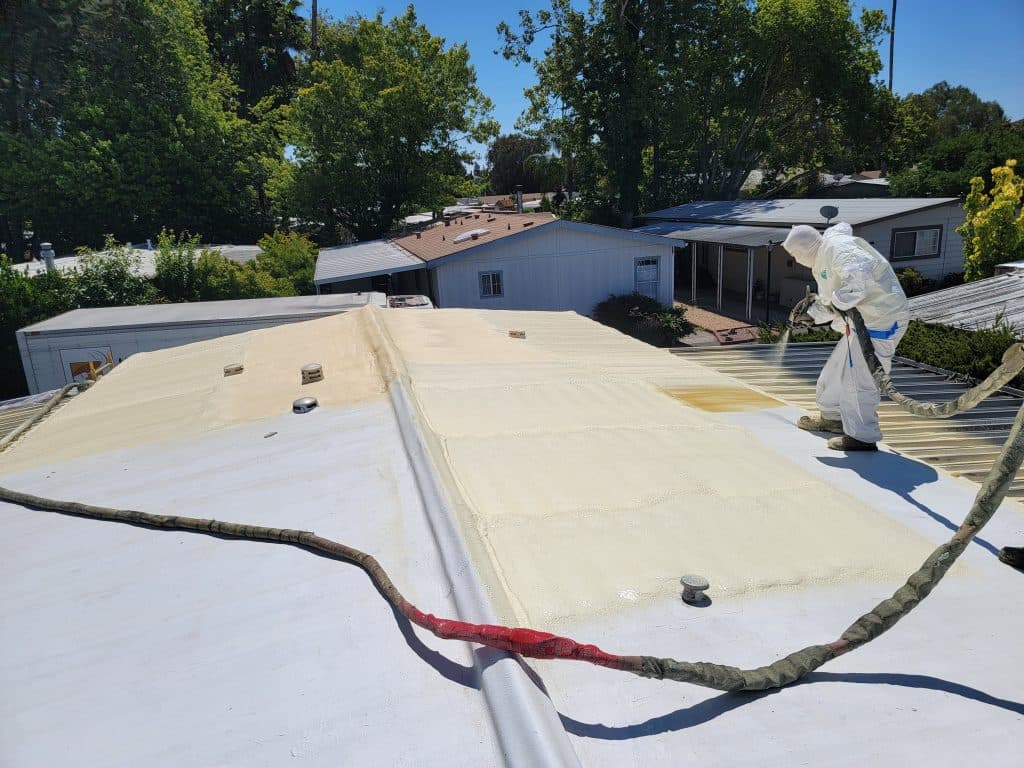
Spray foam roofs need their protective coating intact. Blisters, chalking, and any spot where yellow or brown foam shows through mean the coating is failing. Ponding marks show where the roof does not drain. Caught early, a recoat fixes all of it. Left alone, the foam absorbs water and the fix becomes far more expensive.
Check flashing, pipe boots, and sealant
Roofs rarely leak in the middle of a field of shingles or tile. They leak where something passes through the roof or where two surfaces meet. That means flashing at walls and chimneys, the metal around skylights, and the pipe boots around plumbing vents. Arizona heat is hard on sealant. Rubber pipe boots crack after eight to twelve years of sun. Caulk at flashing edges dries out and pulls away. Cracked flashing lets water in during the next heavy rain, and by the time you see the stain on the ceiling, the roof deck under it may already be damaged. Resealing flashing and replacing worn pipe boots are quick, inexpensive repairs. They are also the repairs most likely to prevent water intrusion this winter.
Attic Ventilation, Ice Dams, and High-Country Roofs
The attic tells you what the roof is doing. On a bright day, turn off the lights and look for daylight coming through the roof deck. Then use a flashlight to look for water stains on the underside of the deck, damp insulation, and any sign of mold growth. Dark streaks that follow the rafters usually trace back to a flashing or pipe boot leak above.
While you are there, check attic ventilation. Soffit vents should be open and clear, not painted over or packed with insulation blocking airflow. Good attic ventilation lets summer heat escape instead of baking the roof deck from below, which extends the roof lifespan and improves energy efficiency. Adding insulation and air sealing the attic floor also helps keep the home warm in winter and cool in summer, but insulation should never cover the soffit vents.
If you live in Arizona’s high country, add a few items to your fall maintenance list. Ice dams form when heat escaping through the roof melts snow, and the meltwater then refreezes at the cold roof edge. Water backs up behind the ice and works its way under the shingles. Good attic insulation and ventilation are the fix, because they keep the roof deck cold and even. Clean gutters matter even more here: a gutter full of winter debris freezes solid and gives ice dams a place to start. Heavy snow loads also stress older roof decks, so any sagging is a structural concern worth a professional look before the first storm. In the low desert, freezing temperatures are rare and brief. Ice dams are not a realistic concern in Phoenix, Chandler, or Tucson. Skip this part and spend the time on your gutters.
When to Call for a Professional Roof Inspection
A homeowner can do a lot from the ground and the ladder. A professional inspection covers what you cannot: walking the roof safely, lifting tiles to check the underlayment, testing sealant, and reading the early signs of wear that only show up after you have seen a few thousand roofs. Routine inspections every fall are the single best way to avoid costly repairs, because almost every major repair we do started as a minor one someone did not see.
Call a roofer this fall if you found any of the following on your checklist:
- Missing or damaged shingles, or any slipped, cracked, or displaced tiles.
- Water stains or damp insulation in the attic.
- Exposed foam, blisters, or ponding marks on a flat or foam roof.
- Cracked flashing, cracked sealant, or pipe boots that look brittle.
- Any sagging, soft spots, or other structural concerns.
- Storm damage from a specific monsoon event, especially if you plan to file an insurance claim.
Sundance Roofing & Painting offers a free inspection for Arizona homeowners, with the owner on every job and straight answers about what needs attention now and what can wait. The best time to book it is October, before the first winter rain tests what the monsoon left behind.
Frequently Asked Questions
How often should I do roof maintenance in Arizona?
Twice a year: once in the fall after the monsoon, and once in late spring before the summer heat.
If you only do it once, fall is the one to keep. It catches storm damage while the weather is mild enough to repair it, and it clears gutters before winter rain. The spring pass is mainly about sealant, coatings, and making sure the roof is ready for another summer of UV exposure.
What should be on a fall roof maintenance checklist?
A ground-level survey, gutter cleaning, downspout flushing, an inspection of shingles or tile, a check of flashing and pipe boots, an attic check, and trimming branches away from the roof.
The homeowner portion is the ground survey, the gutters, the attic, and the trees. The roof-surface items, including lifting tiles to check underlayment and testing sealant, belong to a roofer with proper roof access.
Can I walk on my roof to inspect it?
We do not recommend it.
Tile cracks under foot traffic, foam coatings scuff, and a fall from even a single-story roof causes serious injury. Do everything you can from the ground and a ladder, and leave roof access to a professional. Binoculars show you most of what you need to know about the roof surface.
What does a fall roof maintenance visit cost?
Our inspections are free. Minor repairs typically run a few hundred dollars.
Resealing flashing, replacing a pipe boot, or resetting a few slipped tiles are small jobs. They are a fraction of the cost of repairing a roof deck, drywall, and insulation after a leak goes unnoticed through the winter, which is why regular upkeep pays for itself.
Do gutter guards work in Arizona?
They help with leaves and seed pods but not with fine dust.
You will still need a quick check each fall, and gutters under mesquite or palo verde trees may still need cleaning. For most homes, guards cut the work in half and stop the heavy clogs that hold standing water against the roof edge.
Do Arizona roofs get ice dams?
Only in the high country. Ice dams are not a realistic concern in the Phoenix metro or Tucson.
In Flagstaff, Prescott, Payson, and similar elevations, snow melts and refreezes at the roof edge and can force water under shingles. Attic insulation, attic ventilation, and clean gutters are the prevention. In the low desert, freezing temperatures are too rare and too brief for ice to build.
My roof is only five years old. Do I still need a fall maintenance checklist?
Yes. Sealant, pipe boots, and gutters wear on their own schedule regardless of roof age.
Monsoon storms also do not check the age of a roof before they lift a tile or drive debris into a valley. Regular upkeep from year one is how a roof reaches its full lifespan instead of failing early at a flashing or a clogged gutter.
Keep Reading
More Advice for Arizona Homeowners

Ready When You Are
Get Your Free Estimate
Free estimate. No pressure. Owner on every job — and you don’t pay a dollar until you’re satisfied.
Call (602) 690-8879Get a Free, No-Pressure Quote
Tell us about your project.
Roofing or painting — we’ll call you back within 24 hours to schedule your free on-site estimate.