Blog · May 7, 2026
Monsoon-Proof Your Roof: An Arizona Homeowner’s Guide to Pre-Season Inspection & Maintenance
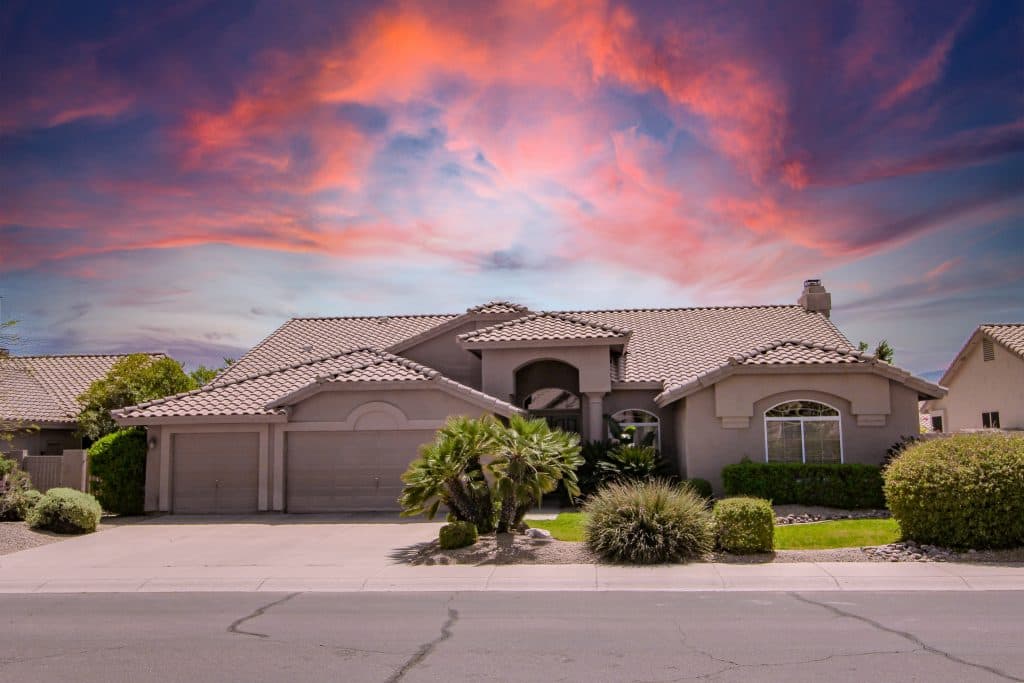
Arizona’s monsoon season delivers more than dramatic lightning shows—it brings sustained winds averaging 40 mph with gusts exceeding 58 mph, intense downpours dumping an inch of rain in under an hour, and airborne debris that can compromise even well-maintained roofs. Between June 15 and September 30 each year, Phoenix metro sees an average of 2.56 inches of monsoon rainfall, and while that may sound modest compared to humid climates, the intensity and wind velocity of Arizona storms create unique roof vulnerability that requires proactive defense.
Key Takeaways
- Arizona’s monsoon winds peak at 40-60 mph sustained velocity, strong enough to lift improperly secured shingles, tiles, and flashing—the National Weather Service reports that 68% of monsoon-related roof damage in Maricopa County stems from wind uplift rather than water intrusion.
- Pre-season roof inspection should occur in April or May, before June 15 monsoon onset, giving you adequate time to schedule repairs without competing against the seasonal demand surge that can delay service by 3-4 weeks.
- Flat and foam roofs face specific monsoon risks: ponding water from intense rainfall can stress seams and penetrations, while debris accumulation blocks scuppers and drains, turning your roof into a shallow pool that degrades membrane integrity.
- Thermal expansion weakens roof components before monsoons arrive—Phoenix’s May and June temperatures routinely hit 105-115°F, causing sealants, flashing adhesives, and tile underlayment to soften and separate, creating pre-existing weak points that monsoon winds exploit.
Why Monsoon Preparedness Isn’t Just About Checking for Leaks
Most Arizona homeowners think monsoon readiness means looking for obvious gaps or missing shingles. That approach misses the real vulnerability: wind uplift and debris impact. According to the National Weather Service Phoenix office, monsoon microbursts—intense downdrafts that spread horizontally upon hitting the ground—can generate localized wind speeds of 60-80 mph, comparable to a weak tornado. These events last only 5-15 minutes, but that’s enough time to strip poorly adhered roofing materials, compromise flashing seals around vents and chimneys, and drive gravel, palm fronds, and palo verde branches under lifted edges.
“The majority of monsoon-related roof failures in the Phoenix metro area result from wind-driven rain entering through compromised flashing or edge metal, not from direct rainfall penetration through intact roofing material. Pre-existing thermal degradation of sealants during May and June leaves these critical junctions vulnerable once storm winds arrive.” — National Weather Service Phoenix WFO, Monsoon Preparedness Bulletin 2025
Arizona’s climate adds a compounding factor: extreme thermal cycling. In May and early June, daytime roof surface temperatures on dark asphalt shingles or tile can reach 160-180°F, while nighttime temps drop to 70-80°F. This 80-100°F daily swing causes repeated expansion and contraction in roofing materials, sealants, and fasteners. By the time monsoon season arrives, adhesive bonds have already weakened, making wind uplift far more likely.
Arizona’s Monsoon Calendar: When Vulnerability Peaks
The official monsoon season runs June 15 through September 30, but severity isn’t uniform. July and August account for 65% of total monsoon rainfall in the Phoenix metro, according to NOAA Regional Climate Centers data. Late July through mid-August is peak microburst season—short-duration, high-intensity storms that produce the most destructive winds. If your roof has underlying weaknesses, these mid-season storms will find them.
Homeowners in Chandler, Gilbert, Mesa, and Queen Creek face an additional variable: these East Valley cities sit in the path of typical southwest-to-northeast storm movement, meaning you often get consecutive storm cells in a single evening. A roof that survives the first storm with minor damage can fail catastrophically during the second or third wave.
For those in higher elevations like Payson or Flagstaff, monsoon dynamics differ: you’re more likely to experience prolonged moderate rainfall rather than violent microbursts, but total seasonal accumulation is higher (Payson averages 6-7 inches June-September vs. Phoenix’s 2.5 inches), creating persistent moisture exposure that can saturate underlayment and decking if flashing or tile seals aren’t watertight.
The Pre-Season Inspection Checklist: What to Examine and Why
A genuine monsoon-proof inspection goes far beyond a visual scan from the ground. Here’s what requires close examination, organized by urgency tier:
| Component | What to Check | Why It Matters | Urgency |
|---|---|---|---|
| Roof edge and drip edge | Loose, lifted, or corroded metal; gaps between metal and fascia | Wind hits edges first—loose edge metal acts as a lever, amplifying uplift across larger sections | Acute |
| Flashing (chimneys, vents, skylights) | Cracked sealant, lifted metal, daylight visible through gaps | Flashing failures are the #1 source of monsoon water intrusion; once water enters, it migrates laterally under roofing | Acute |
| Tile or shingle adhesion | Tiles that rock when pressed; shingles with lifted tabs or edges | Wind-driven rain enters under lifted materials; even 1/4″ gaps allow water intrusion | Near-term |
| Flat roof membrane seams | Visible splits, bubbling, or lifted seams near edges | Seam failures allow sheet flow of water into roof assembly during intense rain | Acute |
| Scuppers and drains (flat/foam roofs) | Debris blockage, standing water after recent rain | Blocked drains create ponding; ponded water adds structural load and accelerates membrane degradation | Near-term |
| Roof penetrations (vents, pipes, HVAC) | Cracked pipe boots, gaps around conduit, loose mounting hardware | Penetrations are pre-engineered weak points; any gap becomes a direct water entry route | Near-term |
| Granule loss on asphalt shingles | Bare spots showing black asphalt substrate | Indicates advanced UV degradation—monsoon winds can strip granules completely, leaving substrate exposed | Watchful |
| Soffit and fascia condition | Peeling paint, visible rot, gaps where fascia meets roof edge | Wind-driven rain infiltrates through soffit gaps, saturating attic insulation and rafters | Near-term |
If any item in the Acute tier shows damage or deterioration, schedule professional roof repair immediately—ideally by early May. Waiting until late May or early June puts you in competition with other homeowners scrambling before monsoon onset, often resulting in 2-4 week delays.
The Hidden Trap: Thermal Damage That Looks Fine Until Wind Arrives
This is what most DIY inspections miss: thermal degradation of sealants and adhesives. From April through early June, Phoenix metro experiences daily high temperatures of 95-115°F. Roof surface temperatures exceed 160°F on dark shingles and tile. At these temperatures:
- Asphalt-based roof sealants soften and lose adhesive strength—they may still look intact, but the bond has degraded by 40-60%.
- Tile underlayment adhesive (for tiles set in mortar or foam) becomes pliable, allowing tiles to shift or lift slightly even before wind stress.
- Butyl rubber flashing tape and pipe boot seals become tacky and can separate from vertical surfaces, creating hairline gaps invisible from the ground.
“Thermal cycling is the silent roof killer in Arizona. A sealant that passed visual inspection in March can fail catastrophically in a July microburst because it spent May and June baking at 170°F during the day and contracting at 75°F at night. The material didn’t tear—it just stopped adhering.” — National Roofing Contractors Association, Hot Climate Roofing Best Practices, 2024
A proper pre-season inspection includes tactile checks—gently pressing tiles to see if they rock, running a gloved hand along shingle tabs to feel for lifted edges, and pressing sealant beads to confirm they’re still firm. If you’re not comfortable working on your roof (and most homeowners shouldn’t be, given fall risk), a professional inspection from Sundance Roofing includes thermal imaging to detect heat differentials that indicate compromised underlayment or moisture intrusion beneath seemingly intact surfaces.
Warning Signs That Change Your Monsoon Risk
Even if your roof looks fine, these conditions escalate vulnerability:
- Roof age 10+ years in Phoenix metro—materials have endured 10+ thermal cycles and UV exposure equivalent to 15-20 years in temperate climates
- South or west-facing roof planes—these receive 30-40% more direct solar hours than north-facing planes, accelerating material degradation
- Large trees within 20 feet of the roof—monsoon microbursts snap branches; even palm fronds become projectiles at 50+ mph
- Previous monsoon damage, even if repaired—once water has infiltrated roof decking or insulation, residual moisture creates hidden weak spots
- Flat or low-slope roof with minimal drainage slope—any roof with less than 1/4″ per foot slope is prone to ponding after intense rain
If three or more of these apply, consider a professional pre-monsoon inspection with a written report. Most reputable roofing contractors in Chandler and Phoenix metro offer this service for $150-$300, and the inspection often identifies $500-$2,000 in preventive repairs that can avert $5,000-$15,000 in post-storm emergency work.
Decision Framework: Repair Now, Monitor, or Replace?
Not every finding demands immediate action. Here’s how to prioritize:
Signs That Change the Answer
- Visible daylight through any roof penetration or flashing joint → Repair immediately (acute risk)
- Standing water on flat roof 48+ hours after last rain → Clear drains and repair membrane seams immediately
- Multiple tiles loose or cracked on a tile roof → If 10+ tiles per 1,000 sq ft are compromised, consider full tile roof replacement rather than piecemeal repair
- Asphalt shingles with 30%+ granule loss → Roof is near end of life; repair immediate acute issues but plan for replacement within 12 months
- Previous monsoon leak, even if “fixed” → Moisture may have compromised decking; a thermal scan can detect hidden damage
| Scenario | Roof Age | Condition | Decision |
|---|---|---|---|
| Tile roof, minor sealant cracks at flashing | 8 years | Overall good, no leaks | Repair flashing sealant before June 15 |
| Asphalt shingle, lifted tabs on 15-20 shingles | 14 years | Moderate granule loss | Repair immediate issues; budget for replacement next spring |
| Flat foam roof, one small seam split | 6 years | Otherwise intact | Seal seam and monitor; full recoat not yet needed |
| Tile roof, 20+ cracked/loose tiles, prior leak | 18 years | Underlayment likely compromised | Replace—piecemeal repairs won’t address hidden underlayment failure |
| Asphalt shingle, no visible damage but 12+ years old | 12 years | Significant granule loss on south slope | Schedule post-monsoon inspection; if no storm damage, plan spring 2027 replacement |
The economic calculus: A $1,200 pre-season repair (flashing reseal, edge metal reinforcement, 10-15 tile replacements) typically prevents $8,000-$12,000 in post-storm interior water damage (drywall, insulation, electrical, mold remediation). Arizona homeowners insurance covers storm damage, but deductibles run $1,000-$2,500, and a claim can increase your premium or risk non-renewal in competitive markets.
Arizona Climate and Timing: When to Schedule Pre-Season Work
Optimal window: April 1 – May 15. Here’s why:
- Contractor availability: Most Arizona roofing contractors experience a lull in March-April after winter/spring replacement projects wrap. Scheduling in April means 1-2 week lead time instead of 4-6 weeks in late May.
- Material performance: Sealants and adhesives cure optimally in 75-95°F temperatures. Work done in April allows full cure before the thermal stress of May-June heat.
- Weather predictability: April is Arizona’s driest month (Phoenix averages 0.2″ rainfall). You won’t lose days to weather delays.
- Post-repair thermal test: Completing work by early May gives your roof 4-6 weeks of thermal cycling before monsoon onset—a real-world stress test that reveals any workmanship issues while there’s still time to address them.
Avoid late May and June for non-emergency work: Roof surface temperatures exceed 150°F, creating unsafe working conditions and suboptimal material adhesion. Most reputable contractors in Chandler and Gilbert won’t schedule new projects between June 1 and mid-September unless it’s emergency storm repair.
For homeowners in Sundance’s service areas—Chandler, Tempe, Mesa, Gilbert, Phoenix, Scottsdale, Queen Creek, San Tan Valley, Casa Grande, and Northern Arizona (Payson, Flagstaff)—the timing window shifts slightly based on elevation. Flagstaff’s monsoon begins mid-June but peaks in August; you have until late May for comfortable scheduling. Conversely, lower-elevation desert communities like Casa Grande often see early-season storm activity in mid-June, compressing your prep window.
Sundance Roofing operates with owners on every job site, which means you’re not dealing with subcontracted crews during the critical pre-monsoon window. Scheduling your inspection and repairs in April or early May ensures you’re working with experienced teams who know Arizona’s unique roof challenges and won’t be juggling 15 emergency calls when the first microburst hits.
Frequently Asked Questions
What’s the most common monsoon roof damage in Arizona?
Wind uplift of edge metal and flashing accounts for approximately 68% of monsoon-related roof failures in Maricopa County, according to National Weather Service damage surveys. Water intrusion follows—not from rain penetrating intact roofing, but from wind-driven rain entering through gaps created by lifted materials. Tile roofs are particularly vulnerable if individual tiles have lost their mechanical fasteners or mortar bond.
How far in advance should I schedule a pre-monsoon roof inspection?
Schedule by early April for a late April or early May inspection. This gives you 6-8 weeks before monsoon onset on June 15, allowing time for repairs without competing against the seasonal surge. If the inspection reveals issues requiring extensive work (multiple flashing replacements, significant tile repairs), you’ll need that lead time to get on a contractor’s schedule before the rush.
Do foam roofs handle monsoons differently than tile or shingle roofs?
Foam roofs are excellent for Arizona’s heat but require proactive drainage maintenance before monsoon season. Because foam roofs are inherently flat or low-slope, intense monsoon rainfall can create temporary ponding if scuppers or drains are even partially blocked. Inspect and clear all drainage pathways in April or May, and check that the protective elastomeric coating is intact—any exposed foam will absorb water. Consider a professional foam roof inspection if your foam roof is 8+ years old.
Can I do my own pre-monsoon roof inspection, or do I need a professional?
Ground-level inspection is useful—grab binoculars and look for obvious damage like missing shingles, displaced tiles, or sagging areas. But the critical inspection points (flashing seals, sealant integrity, tile fastener condition, thermal imaging for hidden moisture) require roof access, specialized tools, and experience distinguishing cosmetic wear from structural vulnerability. Falls from single-story roofs cause 15,000+ ER visits annually in the US; Arizona’s heat adds dehydration and heat exhaustion risk. Unless you’re trained and equipped, a $200-$300 professional inspection is the safer and more thorough choice.
What happens if I skip pre-season maintenance and my roof gets damaged in a monsoon?
Arizona homeowners insurance typically covers “sudden and accidental” storm damage, but insurers increasingly deny claims if they can demonstrate that pre-existing deferred maintenance contributed to the failure. For example, if your roof had visible lifted shingles or deteriorated flashing before the storm, the insurer may argue the damage was foreseeable and therefore not covered. Even if the claim is approved, you’ll pay your deductible ($1,000-$2,500 typical) and face potential premium increases. More importantly, post-storm emergency repairs cost 30-50% more than scheduled pre-season work due to demand surge, and you may wait weeks for service while living with tarps and interior water damage.
Does Sundance offer emergency monsoon repair service?
Yes—Sundance Roofing provides emergency storm damage response throughout our Chandler, Phoenix metro, and Northern Arizona service areas. However, our strong recommendation is pre-season inspection and repair in April-May to avoid needing emergency service. Owners are on every job, and we prioritize existing clients who invested in preventive maintenance. If you do experience storm damage, contact us immediately at our emergency repair line and document the damage with photos for your insurance claim.
Are there any monsoon-specific products or upgrades I should consider?
If your roof is 10+ years old or has a history of wind damage, consider upgrading edge metal with mechanically fastened (screwed, not just adhered) drip edge and reinforced starter strip shingles or tiles. For tile roofs, foam adhesive applied to individual tiles—called “foam-set”—dramatically improves wind resistance compared to traditional mortar-set or mechanical-clip methods. For flat or foam roofs, ensure you have adequate secondary drainage (scupper boxes or overflow drains) to handle the 1-2 inch per hour rainfall rates common in Phoenix microbursts. These upgrades add 10-20% to a repair project cost but can prevent total roof replacement after a severe storm.
Keep Reading
More Advice for Arizona Homeowners

Ready When You Are
Get Your Free Estimate
Free estimate. No pressure. Owner on every job — and you don’t pay a dollar until you’re satisfied.
Call (602) 690-8879Get a Free, No-Pressure Quote
Tell us about your project.
Roofing or painting — we’ll call you back within 24 hours to schedule your free on-site estimate.