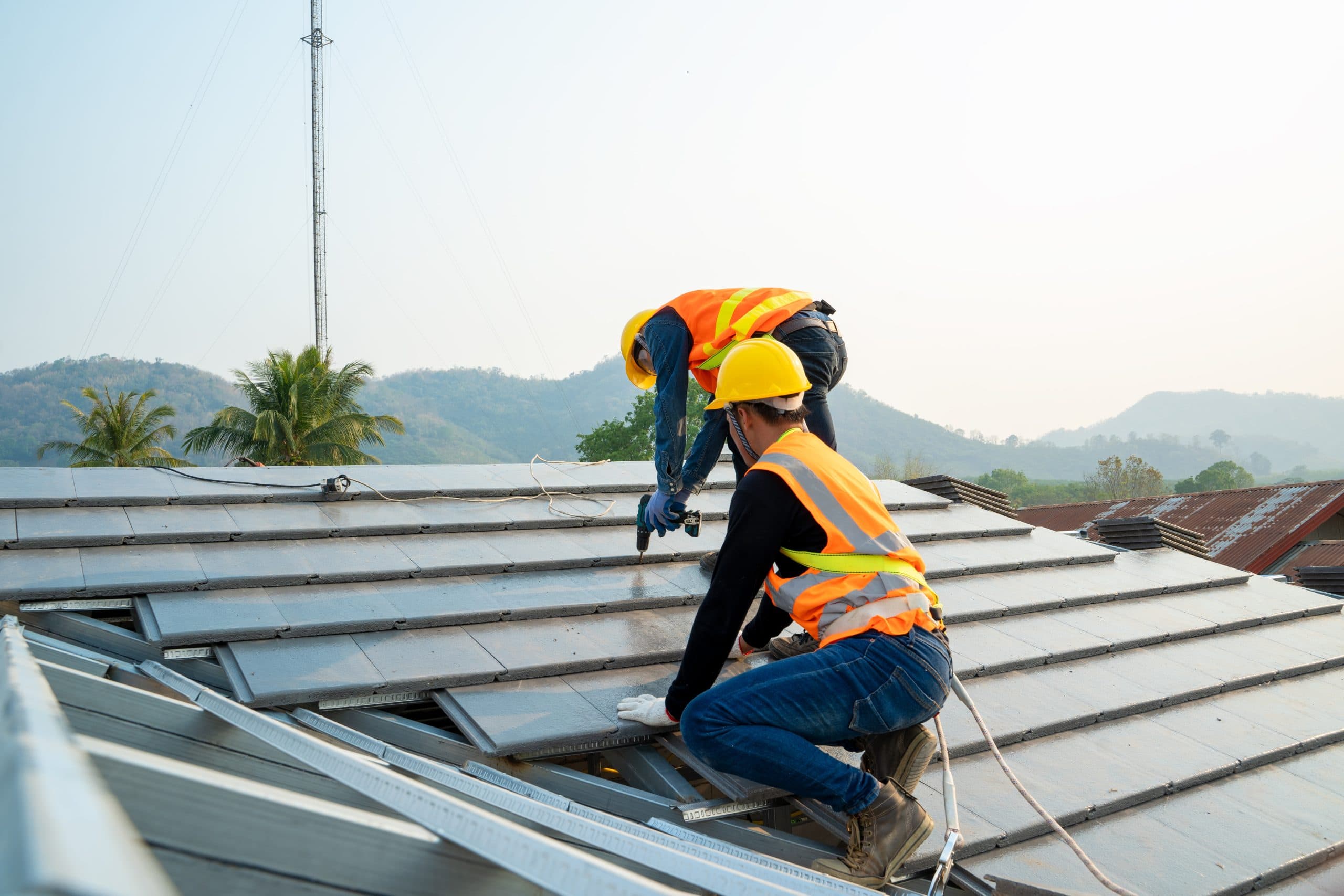
To choose a roofing contractor after storm damage, verify their Arizona license number with the Registrar of Contractors, confirm they carry liability insurance and workers’ comp, insist on a written estimate that itemizes the repair scope, and refuse to sign anything on the first visit. A legitimate roofer will give you all four without pushback. Storm chasers will find a reason to rush you. Sundance Roofing & Painting has handled storm damage roof repair across Chandler, Florence, Casa Grande, and the East Valley for more than 20 years, and this guide is the process we tell homeowners to run us through too.
Why Choosing a Roofing Company After a Storm Is Different
Ordinary roof work happens on your timeline. Storm damage does not. You have a damaged roof, possibly active leaks, an insurance claim to file, and a neighborhood suddenly full of out-of-state crews knocking on doors. That combination of urgency and unfamiliar companies is exactly the environment where bad decisions happen.
The pressure is real: water intrusion spreads, mold growth starts within days in a wet roof cavity, and a tarp is not a permanent solution. But a damaged roof does not require a same-day contract. Every established roofer in the Valley will secure the roof against further damage first and let you take your time on the permanent repairs.
Types of Storm Damage a Roof Takes in Arizona
Knowing what kind of storm damage you are dealing with helps you judge whether a contractor’s assessment is credible. Severe weather in the Valley damages a roof in four distinct ways, and each leaves a different signature.
Wind and High Winds
Monsoon outflow winds routinely exceed 40 mph and occasionally top 100 mph. Wind breaks the seal on asphalt shingles, lifts them, and leaves missing shingles or damaged shingles along ridges and eaves. On tile, high winds slide and lift pieces at the rakes. Wind also peels metal flashing away from walls and chimneys, which is where wind damage most often turns into roof leaks.
Hail and Impact Damage
Hail storms are less frequent here than in the Midwest but far from rare, and hail is uniquely deceptive. Impact bruises shingles without breaking them, leaving a roof that looks intact but has lost granule protection across the field. Cracked shingles and dented vents, gutters, and fascia are often the only visible damage from the ground.
Debris and Tree Limbs
Heavy rain and wind bring down tree limbs, gravel, and yard debris onto the roof. A single impact can puncture the roof surface, crack tile, or dent a flat roof membrane. After a storm, downed power lines and unstable limbs are also why nobody should be walking the property until conditions are safe.
Heavy Rain and Water Intrusion
Wind driven rain gets past flashing and into places normal rainfall never reaches. This is the damage that makes a roof vulnerable long after the storm is over: water sits in the deck, degrades the underlayment, and shows up as roof leaks weeks later.
Step 1: Document the Roof Damage Before Anyone Arrives
Before you talk to a contractor, know what you have. Walk the property from the ground and photograph everything: broken shingles in the yard, missing shingles on the roof, cracked or slipped tile, dented gutters and soft metals, debris, and any siding damage. Inside, photograph water stains on ceilings and walls, damp insulation in the attic, and bubbling paint.
This matters for two reasons. It anchors your insurance claim to the date of the storm, and it means you can tell whether a contractor’s assessment matches reality. A roofing contractor who reports far more roof damage than you can see anywhere should be asked to show you photos from the roof.
- Photograph visible damage from every elevation of the house.
- Note the date and time of the storm and the type — wind, hail, or both.
- Check the attic for daylight, damp material, and staining on the decking.
- Keep receipts for tarps, buckets, and any emergency work.
Step 2: Verify the License Before Anything Else
Arizona requires a license for roofing work above a small dollar threshold, and the Arizona Registrar of Contractors publishes a free public search. Type the business name or license number and you will see whether the license is active, what classification it holds, and whether there are complaints against it. This is a two-minute check that eliminates most bad actors.
Ask for three things and expect immediate answers: the ROC license number, a certificate of general liability insurance, and proof of workers’ compensation. If a crew is not covered and someone is hurt on your property, that exposure can land on you. A contractor who is evasive about any of the three has answered the question.
Arizona’s Registrar of Contractors also handles complaints and, for licensed contractors, administers a Residential Contractors’ Recovery Fund. That protection only exists if the contractor is licensed — one of several practical reasons the license check comes first.
Step 3: Know the Storm Chasers’ Playbook
After every significant storm, crews from out of state work Valley neighborhoods door to door. Some do competent work. Many take deposits, do a fast job, and are unreachable when the roof leaks again. The tactics are consistent enough to be a checklist.
| Red Flag | Why It Should Stop You |
|---|---|
| Unsolicited door knock right after the storm | Established local companies get calls; they do not need to canvass |
| “Sign today or the price goes up” | Manufactured urgency to prevent comparison shopping |
| Large cash deposit up front | The most common way homeowners lose money entirely |
| Offers to “cover” or waive your deductible | Insurance fraud, and you are a party to it |
| No physical Arizona address or local phone | Nobody to call when the warranty matters |
| Wants to handle the insurance claim entirely for you | An assignment of benefits can hand over control of your claim |
| Estimate is a single number, no scope | Nothing to hold them to when the work is done |
None of this means an out-of-town crew is automatically dishonest. It means the burden of proof is on them, and the license check plus a written scope resolves it quickly.
Step 4: Get Written Estimates for Damaged Shingles and Tile
Two or three estimates is the right number. More than that wastes everyone’s time. What you are comparing is not just the bottom-line number — it is whether each roofer saw the same damaged roof and priced the same storm damage roof repair.
A proper storm damage roof repair estimate lists the affected areas, the materials and quantities, whether underlayment or decking is being replaced, how flashing and penetrations are handled, permit costs, cleanup, and the warranty on both materials and workmanship. If one bid is dramatically lower, read the scope: it is usually cheaper because it is doing less, not because the company is more efficient.
- Scope of the repair — exactly which sections of the roof are being addressed.
- Materials — brand, product line, and quantity, not just “shingles.”
- Structural work — whether damaged decking or framing is included or will be a change order.
- Timeline — start date, duration, and what happens if weather delays it.
- Warranty — length and what it actually covers.
- Payment schedule — deposit, progress, and final payment terms.
Step 5: Understand How the Insurance Claim Fits
Most homeowners policies cover sudden storm damage — wind, hail damage, and impact from falling debris — while excluding wear and tear. Your insurance company will send an adjuster to assess the damaged roof and write a scope. A good roofing contractor meets that adjuster on site, points out damaged shingles and hidden problems the adjuster may miss, and supplements the claim where the scope is short.
What a contractor should not do is take over the claim. Be cautious with any document that assigns your claim benefits to the roofer — that transfers your leverage. And no legitimate company will offer to eat your deductible; in Arizona that is fraud, and it exposes you as well as them. Our guide on whether homeowners insurance covers monsoon roof damage covers the coverage side in detail. This is general information, not insurance advice — confirm specifics with your agent.
Temporary Fixes vs. Permanent Repairs
There are two phases after a storm, and they run on different clocks. Temporary fixes — tarping over broken shingles, sealing an opening, clearing debris from drains — should happen immediately to stop water intrusion and prevent further damage. Insurers expect you to take reasonable steps to protect the property. Major repairs wait until the adjuster has documented the loss and the scope is agreed.
Do not let anyone tell you the permanent work must start tomorrow. Rushing it before the claim is settled is how homeowners end up paying for work the policy would have covered.
What Storm Damage Roof Repair Actually Involves
Homeowners often have no picture of what they are buying, which makes bids hard to compare. A storm damage roof repair runs in a predictable order, and any roofing company should be able to walk you through it on your own damaged roof.
- Inspection and documentation. Photos from the roof, moisture readings, and a written scope of the damage.
- Emergency protection. Tarping and drying to protect the interior while the claim is processed.
- Tear-off of the affected area. Removing damaged shingles or tile back to sound material.
- Deck repair. Replacing sheathing that water reached — the step cheap bids skip.
- Underlayment and flashing. New underlayment and new metal flashing at every penetration in the repair area.
- Finish and cleanup. New shingles or tile installed, magnetic sweep for nails, debris hauled off.
- Final walkthrough. You see the finished repair and receive the warranty in writing.
Necessary repairs are the ones that restore the roof’s integrity — everything else is optional. A contractor who cannot separate those two categories for you is guessing, or selling. Ask specifically which line items are needed to make the roof watertight and which are recommended improvements, and the answer tells you a great deal about the roofer.
Roof Leaks and Interior Damage After a Storm
Roof leaks are the reason storm damage matters. A missing shingle is an inconvenience; the water that follows it is the expense, and roof leaks are what insurance is meant to protect you from. And roof leaks rarely appear directly under the breach — water travels along rafters and shows up in a room on the other side of the house.
Watch for water stains spreading on ceilings, damp insulation in the attic, bubbling paint on walls, and a musty smell that means moisture has been sitting. Active leaks during the next rain confirm the roof is still open. Left alone, small roof leaks become the costly repairs nobody budgets for: ceiling replacement, mold remediation, and sometimes structural damage to framing.
The recovery process after a storm is mostly a race between you and the water. Protect the interior first with tarps and dehumidification, then repair the roof properly to protect what is underneath. Contractors who understand that sequence will secure the house before they talk about contracts.
Repair or a New Roof? What an Honest Roof Replacement Assessment Looks Like
Not every damaged roof needs a new roof. A contractor whose first visit produces a full replacement quote, without explaining why a repair will not work, is worth a second opinion. Storm damage roof repair is the right answer far more often than replacement.
- Targeted repair — damage confined to one slope or a few dozen tiles or shingles, with sound underlayment elsewhere.
- Section replacement — one elevation took the wind or hail and the rest is intact.
- Full roof replacement — widespread damage across the field, failed underlayment, structural damage, or a roof already near end of life.
The honest test is whether the contractor can show you why. Photos from the roof, moisture readings, and a clear explanation of what is damaged and what is not. Our roof repair services page explains how we scope a storm damage roof repair, and our article on signs of storm damage on your roof covers what to look for yourself.
Hidden Damage: How the Right Choice Helps You Save Money
The real cost of the wrong contractor is not the repair price — it is what gets missed. Roof leaks that were sealed cosmetically instead of properly keep running. Interior damage follows: stained ceilings, saturated attic material, and mold growth inside walls within a week or two of a wet attic in an Arizona summer.
Structural damage compounds the same way. A cracked rafter or soft decking left under fresh shingles is still there, still failing, and now hidden under a warranty nobody will honor. Choosing carefully the first time is how you save money — not by taking the cheapest bid. Hidden damage is what makes the cheapest bid expensive.
| What Gets Skipped | What It Becomes |
|---|---|
| Damaged decking left in place | Sagging roof and a second tear-off |
| Flashing reused instead of replaced | Recurring roof leaks at every wall junction |
| Wet material not removed | Mold growth and damage inside the ceiling |
| Broken shingles patched, not replaced | Repeat failure in the next storm |
| No permit pulled | Problems at resale and no code inspection |
What Storm Damage Roof Repair Costs — and What Insurance Covers
Cost is the question everyone asks first and the hardest to answer over the phone, because a damaged roof is priced by scope, not by square footage alone. Two homes on the same street can have wildly different repair costs depending on how far water traveled before anyone looked.
What drives storm damage roof repair costs on an Arizona roof:
- Extent of the damaged area — one slope versus the whole roof.
- Roofing material — tile repair costs more per square than a shingle repair, because tile has to be lifted to reach the underlayment.
- Deck condition — replacing sheathing adds materially to any repair.
- Access — a steep two-story roof takes longer to protect, stage, and work.
- Permits — required by most Valley cities on larger jobs.
Insurance coverage usually absorbs most of it. A standard policy covers sudden storm damage to the roof, minus your wind and hail deductible, and does not cover pre-existing wear. What is covered and what is excluded varies by policy, so ask your agent directly rather than taking a contractor’s word for it. When the claim is approved, you pay the deductible and the insurer pays the rest of the approved repair.
The one cost worth avoiding entirely is the second repair. A damaged roof repaired properly the first time will protect the house through the next monsoon; one repaired cheaply will show the same leaks in September. Choosing a licensed contractor who documents the damaged roof honestly is the cheapest decision available to you.
Questions to Ask Any Roofing Contractor About Your Damaged Roof
Run this list on every contractor you talk to, including us. The answers sort the field quickly.
- What is your Arizona ROC license number, and how long have you held it?
- Do you have a physical address in the Valley?
- Can you provide liability and workers’ comp certificates?
- Will your own crew do the work, or subcontractors?
- Will you pull the permit?
- Will you meet my insurance adjuster on site?
- What is your workmanship warranty, and what voids it?
- Can I see photos of the damage from the roof itself?
- What is the payment schedule, and what is due before work starts?
Two answers matter most. A contractor should never require substantial payment before materials are delivered, and a contractor should always be able to show you what they saw up there.
Frequently Asked Questions
Should I use the contractor my insurance company recommends?
You can, but you are not required to. Arizona homeowners choose their own contractor. A preferred-vendor list is a convenience, not an obligation, and an independent local roofer works for you rather than for the insurance company.
How soon after storm damage do I need to hire someone?
Get emergency tarping within a day or two to stop water intrusion, then take a week to choose who does the permanent work. Speed matters for protecting the house; it does not need to apply to the contract.
How much should I pay up front?
Little or nothing. Established Arizona roofers typically bill on completion or on a materials-delivered schedule. A large cash deposit before any work is the single biggest warning sign in storm repair.
What if the adjuster’s estimate is lower than the repair bid?
That is common and usually fixable. Your contractor can submit a supplement with photos and documentation for damage the adjuster missed. It is a normal part of the insurance process, not a dispute.
Can hail damage be invisible from the ground?
Yes. Hail bruises shingles and cracks tile without producing an immediate leak, and impact damage to soft metals like vents and gutters is often the only visible sign. A professional inspection is the only reliable way to assess it.
Is a free storm damage inspection actually free?
With reputable roofers, yes — including ours. Free inspections are standard here. We inspect, document, and give you a written assessment with no obligation. Anyone who asks for payment before telling you whether you have damage is selling something else.
Get a Free Storm Damage Inspection
If a monsoon storm hit your neighborhood, we will inspect the roof, document the roof damage, and tell you honestly whether you need a storm damage roof repair, a partial replacement, or nothing at all. Sundance Roofing & Painting has served Chandler, Gilbert, Mesa, Queen Creek, Florence, and the East Valley for more than 20 years under Arizona License #329097 — owners on every job, no upfront payment, no upselling, and an A+ BBB rating.
Request your free storm damage inspection, and run our license number through the ROC before we arrive. We would rather you check.
Keep Reading
More Advice for Arizona Homeowners

Ready When You Are
Get Your Free Estimate
Free estimate. No pressure. Owner on every job — and you don’t pay a dollar until you’re satisfied.
Call (602) 690-8879Get a Free, No-Pressure Quote
Tell us about your project.
Roofing or painting — we’ll call you back within 24 hours to schedule your free on-site estimate.