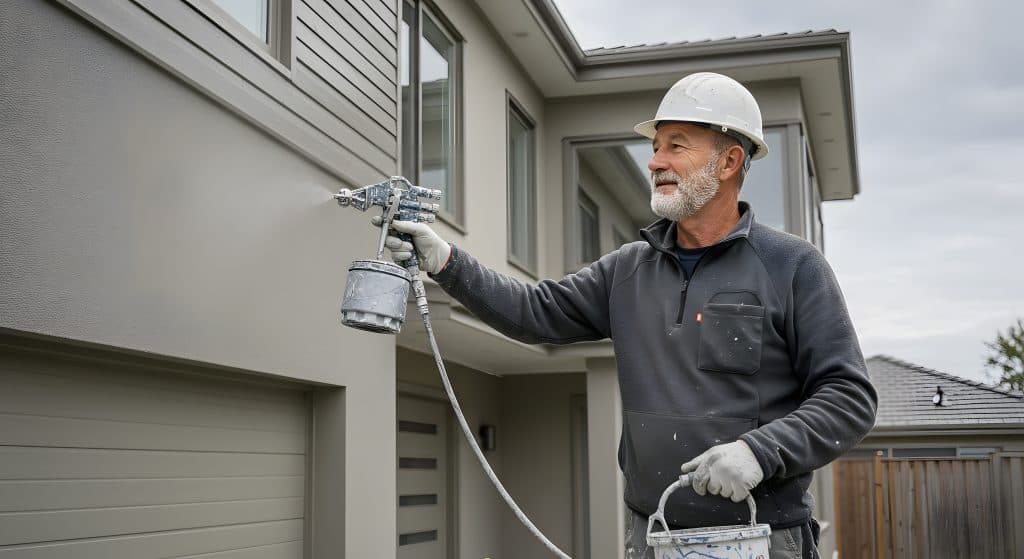
The “repaint every 5-10 years” rule you’ve seen repeated across the internet isn’t wrong, but it’s not useful either. Your actual repaint timeline depends on what your house is made of, how well the last exterior paint job was prepped, and whether your home’s exterior is showing signs of film failure or just fading. Sundance Roofing & Painting brings 20+ years of exterior painting experience across Arizona, where intense sun tests every coating system we install.
Key Takeaways:
- Wood siding needs recoating every 3-7 years; stucco and hardboard every 5-7 years, per the USDA Forest Service
- A primer-and-two-topcoat system extends paint longevity to about 10 years in full sun, per the American Coatings Association
- Chalking, cracking, and peeling signal coating failure, not just cosmetic aging
- Homes built before 1978 may require lead-safe precautions before any exterior repaint
How Long Exterior Paint Lasts by Siding Type
The generic “5-10 years” answer falls apart once you separate wood siding from stucco from vinyl. Each material absorbs moisture, expands, and degrades at different rates, which means each one wears through its paint film on a different schedule.
Wood siding requires a new coating every 3-7 years, according to USDA Forest Service maintenance guidance. That range is wide because wood species, grain orientation, and whether the surface was back-primed all affect how quickly moisture cycles break down the paint film. Bare wood exposed by worn paint absorbs water fast, accelerating rot and costly repairs.
| Material | Repaint Range | Source | Key Factor |
|---|---|---|---|
| Wood siding | 3-7 years | USDA Forest Service | Moisture absorption, grain exposure |
| Stucco / Hardboard (EIFS) | 5-7 years | USDA Forest Service | Hairline cracking, UV on thin coatings |
| Aluminum siding | 5-10 years | Common industry guidance | Oxidation, chalking |
| Vinyl siding | Rarely needs painting | Industry guidance | Factory finish; repaint only if color-changed |
| Brick | 10-15 years | Common industry guidance | Moisture vapor, efflorescence |
These ranges assume average sun exposure and a properly prepped surface. A house in full southern exposure with a single coat of paint will hit the low end of every range. Coastal areas face additional challenges from salt air and humidity that accelerate coating breakdown.
You can see how different materials and prep levels affect finished results in our portfolio of completed exterior painting projects. The material on your walls sets the starting point, but what happens next depends on how the exterior paint job was applied and what your house exterior faces every day.
Why Your Repaint Timeline Depends on More Than Material
A primer plus two topcoats lasts approximately 10 years in full sunlight before the primer begins to show through, according to American Coatings Association technical guidance.
That finding explains why two houses with the same siding can need repainting years apart. The paint system (primer plus topcoats versus a single coat) and the prep work underneath it determine how long the film holds together under sun exposure and weather cycles. Proper surface preparation means using a pressure washer to remove dirt and mildew, scraping any peeling paint back to a sound edge, priming bare spots, and applying two coats of exterior paint with the right tools.
Several environmental factors shift your repaint window beyond material type:
- Sun exposure intensity: South- and west-facing walls degrade faster. Intense sun breaks down paint binders, causing chalking and fading years before shaded walls show wear.
- Prep and paint grade: Higher quality paint with better coverage and UV-resistant binders outlasts budget latex paints. Paint quality matters, but even the highest-grade paint fails early over a poorly prepped surface.
- Color choice: Paint colors affect longevity. Lighter colors show fading sooner without necessarily indicating film failure, while darker colors absorb more heat and can crack sooner.
- Moisture and maintenance: Homes near irrigation, with poor drainage, or with mildew growth on painted surfaces lose adhesion faster. Regular maintenance like cleaning gutters and trimming vegetation away from walls extends the life of any coat of paint.
Prep and contractor choice matter as much as the paint itself. Homeowners consistently mention prep shortcuts as their biggest frustration in client reviews of painting contractors. Skilled painters who invest time in surface preparation deliver paint jobs that reach the upper end of every material’s lifespan range.
Signs Your Exterior Paint Is Failing
Faded paint and failing paint look different, and only one means you need to repaint now. A house exterior can look dull after a few years of sun damage without any loss of protective function. The paint film is still intact, still blocking moisture, still doing its job.
Failure is different: it means the coating has broken down and your home’s exterior is exposed.
Here’s what to check on your own:
- Chalky residue: Run your hand across the siding. If a powdery, chalky residue transfers to your palm, the paint’s binder has degraded and UV is reaching the substrate.
- Peeling paint: Paint pulling away from the surface in sheets or strips means adhesion has failed. Moisture is likely cycling behind the film.
- Cracking paint: Fine cracks in the paint film (not the substrate itself) indicate the coating has lost flexibility. Minor cracks become entry points for water damage.
- Bubbling or blistering: Paint bubbles form when moisture or heat gets trapped under the film. This is a clear sign of either moisture damage behind the wall or improper application.
- Persistent mildew: Dark streaks or mildew growth that returns within weeks of cleaning suggest the paint’s mildewcide has broken down and the surface is retaining moisture.
- Visible substrate: Any spot where bare wood, stucco, or hardboard shows through worn paint needs immediate attention. Exposed substrate absorbs water and deteriorates fast, leading to further damage and costly repairs.
The distinction matters for your wallet. Fading on its own is cosmetic. You can live with it.
Peeling, cracking, and chalking mean the protective barrier is gone and your siding is taking weather damage regularly. That’s when the calendar stops mattering and the condition of your exterior tells you what to do next.
When to Touch Up vs. When to Repaint the Whole House
Not every worn exterior needs a full repaint. Sometimes a cleaning or targeted touch-up buys you several more years. The decision depends on what you see when you inspect, not on how many years have passed since the previous paint job.
| Condition | What You See | What to Do |
|---|---|---|
| Film intact, color dull | Fading, dirt buildup, no peeling or chalking | Clean with pressure washing. Monitor annually. |
| Localized failure | Peeling or cracking paint on one wall or trim area; surrounding paint adheres well | Touch up: scrape, prime bare spots, repaint affected areas only |
| Widespread failure | Chalking on multiple walls, peeling across large sections, bare substrate visible | Full repaint with proper preparation: scrape, sand, prime, two coats |
A fresh coat of paint over a failing surface won’t last. If you’re seeing widespread chalking or peeling, the new paint job needs to start with full prep, not just a fresh coat over the old one. Behr’s masonry and stucco paint carries a 20-year limited warranty, but real-world repaint timing still depends on how well the surface was prepped, how much sun exposure the walls get, and whether visible wear has already started.
The framework is simple: if the film is intact, wait. If damage is localized, a fresh coat on affected areas can extend the life of your existing coating. If failure is widespread, it’s time for a full exterior painting project with proper prep.
Hiring exterior painting contractors who understand when to cut costs with targeted touch-ups versus when a complete repaint protects your investment makes the difference. And if your home was built before 1978, see FAQ 9 below about lead-safe precautions before disturbing any paint.
Frequently Asked Questions
How long does exterior house paint last?
Exterior paint lasts 3-15 years depending on siding material, paint system, and sun exposure.
The material table above shows USDA-sourced ranges from 3-7 years for wood to 10-15 years for brick. Paint system matters just as much: Consumer Reports 2026 testing showed top-rated exterior paints resisted degradation for 9+ years under accelerated weathering. A single coat over bare wood won’t come close to those numbers. Two coats over properly prepped and primed surfaces will.
How do I know if my house needs repainting?
Run your hand across the siding: if chalky residue transfers to your palm, the paint’s binder has failed.
Chalking is the earliest clear sign of film breakdown. Peeling paint, cracking paint, and visible substrate are later-stage failures that mean moisture is reaching your home’s surface. Fading alone doesn’t count. If you’re unsure whether what you’re seeing is cosmetic or structural, schedule a free estimate and exterior painters can assess the coating condition on-site.
Can you just paint over old exterior paint?
You can paint over old exterior paint only if the existing coat adheres well and the surface is properly prepped.
If the current paint is peeling, cracking, or chalking, applying a new coat over it traps the problem underneath. The new paint will fail within a year or two. You need to scrape loose paint back to a sound edge, sand rough transitions, prime any bare spots, and then apply your topcoats. For more on prep steps and common mistakes, check our painting FAQs.
How often should stucco be repainted?
Stucco repaint timing ranges from 5-8 years depending on the stucco type, sun exposure, and surface condition.
The USDA Forest Service puts synthetic stucco (EIFS) and hardboard at 5-7 years. Traditional three-coat stucco tends to hold paint slightly longer, with Houzz community data citing roughly 8 years as a common interval. Arizona stucco homes in full southern exposure often hit the low end of that range. Homeowners across Maricopa County can connect with an exterior painting contractor in Mesa, AZ for a condition-based assessment rather than guessing by the calendar.
Is faded exterior paint just cosmetic?
Fading alone is cosmetic and does not mean your home’s exterior paint has failed.
UV light breaks down pigment molecules before it breaks down the binder that holds the paint film together. A faded wall can still be fully protected. The problem starts when fading is accompanied by chalking, peeling, or cracking. Those signs mean the binder itself has degraded and the protective barrier is compromised. If your house exterior looks dull but passes the hand-rub test with no chalky residue, you can safely wait.
Can I touch up peeling spots or do I need to repaint the whole house?
Localized peeling on one wall or trim section can be touched up if the surrounding paint still adheres firmly.
Scrape the peeling area back to a sound edge, prime the exposed substrate, and apply two coats to match. The touch-up holds when the failure is isolated. If you’re finding peeling paint, chalking, or cracking on multiple walls, the coating is failing system-wide and spot repairs won’t last. At that point, a full exterior painting project with complete prep is the cost-effective move. Request a free estimate to find out which approach fits your situation.
What is the best time of year to paint the exterior of a house?
Dry conditions with temperatures between 50-85°F and low humidity give exterior paint the best cure.
Most latex paints need at least 4-6 hours of dry time before moisture exposure. In Arizona, late fall through early summer avoids the extreme weather of peak summer, when surface temperatures on sun-facing walls can exceed 150°F and cause paint bubbles. Sundance Roofing & Painting schedules exterior painting projects to hit these windows, which is one reason we recommend starting the conversation early. Learn more about Sundance Roofing & Painting and how we plan around Arizona’s climate.
Does Arizona sun make exterior paint wear out faster?
Phoenix averages 86% of possible sunshine annually, rising to 94% in June, per National Weather Service climate data.
That level of UV exposure accelerates the breakdown of paint binders faster than most national averages assume. Sundance Roofing & Painting sees this firsthand across Maricopa and Pinal County homes, where south- and west-facing walls often need repainting 1-3 years sooner than the same material in a less sunny climate. Contractors who understand desert conditions and properly prep surfaces make the difference between a new paint job that lasts and one that chalks within a few years. Our exterior painting contractor in Chandler factors Arizona’s sun exposure into every project plan.
Do older homes need special precautions before repainting?
The EPA requires that any repaint project on a pre-1978 home with lead-based paint follow the Renovation, Repair, and Painting (RRP) rule to prevent dangerous lead dust exposure, per EPA lead-safe renovation guidance.
Scraping, sanding, or pressure washing old lead paint without proper containment sends toxic dust into the air and soil around your house. Contractors performing this work must be EPA-certified under the RRP rule. If your home was built before 1978, confirm your contractor’s RRP certification before any exterior painting project begins. Sundance Roofing & Painting’s painting services include assessing coating age and condition before we start any prep work.
When should I start painting my home’s exterior?
Start painting when you see chalking, peeling, or cracking, not based on a fixed timeline.
The calendar matters less than the coating’s condition. If your paint film is intact but faded, you can wait. If you’re seeing film breakdown on multiple walls, hiring professionals before moisture damage spreads is the cost-effective move. High traffic areas like entryways and garage doors may show wear first. For related projects like cabinet painting, oil based paint was once the standard, but modern latex formulations offer comparable durability with easier cleanup.
Keep Reading
More Advice for Arizona Homeowners
Ready When You Are
Get Your Free Estimate
Free estimate. No pressure. Owner on every job — and you don’t pay a dollar until you’re satisfied.
Call (602) 690-8879Get a Free, No-Pressure Quote
Tell us about your project.
Roofing or painting — we’ll call you back within 24 hours to schedule your free on-site estimate.