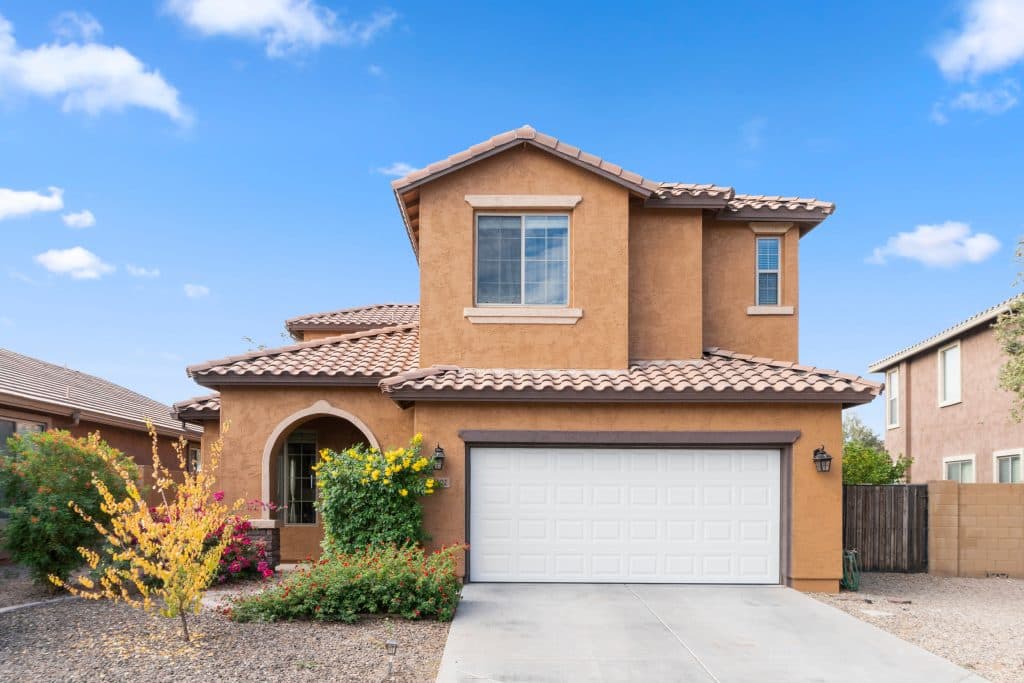
Most Arizona homeowners assume their roof only takes damage during monsoon storms. The damage that matters most actually happens during the months between storms. This guide explains how extreme heat in Arizona wears down roofing systems, what to watch for on shingles, tile, and flat roofs, and how to decide whether to monitor, repair, or replace. Sundance Roofing & Painting has inspected Arizona roofs for over 20 years, and the same heat-driven failures show up again and again.
Key Takeaways
- Arizona’s monsoon season runs June 15 through September 30, and heat-weakened roofs often leak first during this window.
- Tile roof damage usually starts in the underlayment and flashings — not the tile itself.
- Heat damage builds gradually through UV breakdown, daily thermal cycling, and cumulative heat soak.
- The U.S. Department of Energy advises against field-applied reflective coatings on existing asphalt shingles, due to moisture and warranty risk.
How Arizona’s Heat Actually Damages a Roof
According to the National Weather Service Phoenix, Phoenix recorded 143 days at or above 100°F and 70 days at or above 110°F in 2024, making it the city’s warmest year on record at an average 78.4°F.
That kind of prolonged exposure to high temperatures puts a roof through three different stresses, and you can read more in the NWS 2024 climate year in review. The first is UV degradation: UV rays and intense sunlight from Arizona’s sun break down the chemical bonds in shingle asphalt, sealants, and coatings over extended periods, creating UV damage that weakens materials from within. The second is thermal expansion and contraction, the constant cycle as roof temperatures swing from triple digits at midday down to the 70s overnight. High heat environments create these daily temperature swings that stress every roofing material through constant movement. The third is cumulative heat soak, where heat absorbed by dark surfaces during summer temperatures lingers and bakes adhesives, fasteners, and underlayment for hours after the sun goes down.
The U.S. Department of Energy reports that conventional roofs can reach 150°F or more on a summer afternoon, while reflective roofs stay more than 50°F cooler under the same conditions.
That surface heat is what does the damage, and the Department of Energy guidance on cool roofs confirms how dramatic the temperature swings get. At 150°F and above, asphalt softens, granules loosen, sealants fatigue, and metal fasteners expand against materials that contract overnight. None of this happens in one day. It happens across thousands of hours of relentless sun across Arizona’s climate, which is why the warning signs show up gradually and then all at once. What this stress looks like on your roof depends on the material above your head.
Warning Signs by Roofing Material
The most common mistake we see is assuming heat damage is visible from the curb. With some roofing materials it is. With others, especially tile, the surface can look fine while the roofing system underneath has already failed. Here’s how heat-related wear shows up on each of the main Arizona roof types so you can catch early signs before they turn into major problems.
| Roof Material | What Heat Does | What to Look For |
|---|---|---|
| Asphalt shingles | UV breaks the chemical bonds; granules loosen; shingles curl, crack, or blister | Bare patches, curled edges, granules in gutters, cracked shingles |
| Tile (concrete or clay) | Tile itself is heat-stable, but heat degrades the underlayment and flashings beneath | Cracked tiles after impact, slipped tiles, daylight at flashings, stains on the ceiling below |
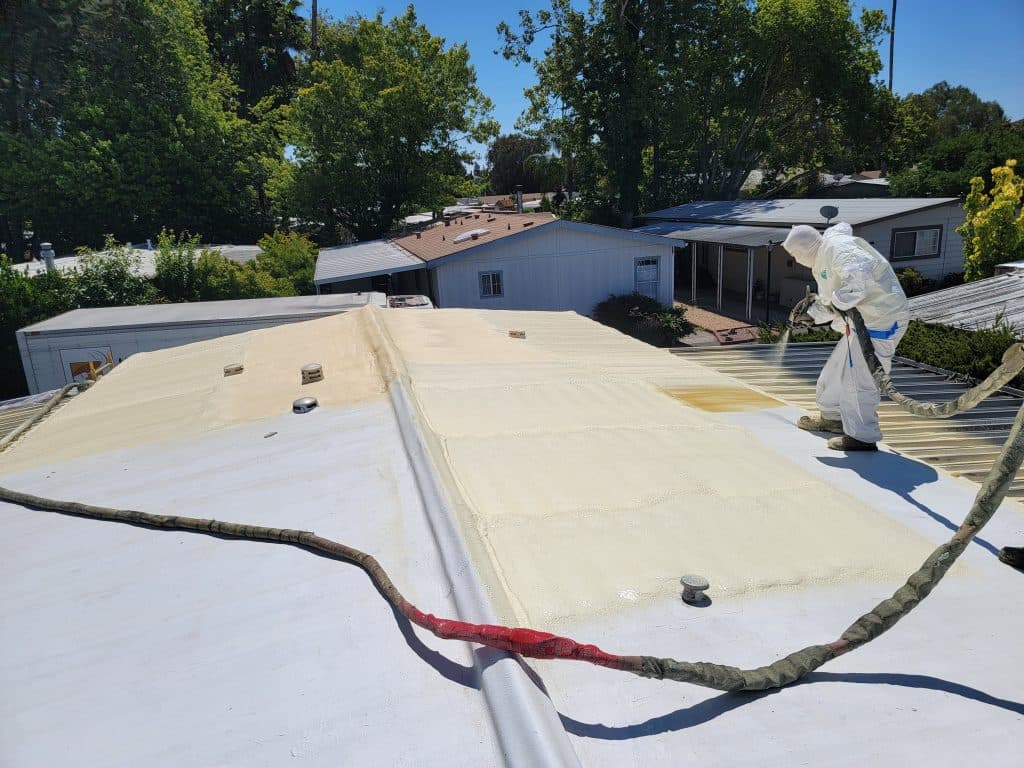
| Foam (SPF) | UV breaks down the topcoat; foam blisters and yellows; coating thins | Blistering, exposed yellow foam, ponded-water marks, soft spots |
| Flat (modified bitumen or single-ply) | Heat-cycle stress at seams and edges; membrane shrinks; seals fatigue | Open seams, alligatoring, bubbling, lifted edges around penetrations |
| Metal roofing | Heat expands and contracts panels; fastener seals dry out; coatings fade | Loose or backed-out fasteners, oil-canning, faded coating, sealant gaps |
If you have a shingle roof, granule loss is the first early sign and it shows up in your gutters before it shows up overhead. For deeper context on shingle wear, see how long asphalt shingles last.
Tile is the deceptive case. Concrete and clay tile handle heat well on their own, but the waterproofing on a tile roof is not the tile itself. It’s the underlayment and flashings sitting underneath, and those materials are what carry the actual waterproofing load. Years of cumulative heat exposure dry them out and crack them, and by the time a monsoon storm reveals a leak, the underlayment has often been compromised for months. Even a minor crack in the underlayment can allow water intrusion during storms. That’s why a proper tile roof repair addresses what’s beneath the tile, not just the tile you can see.
Why Monsoon Season Exposes Hidden Heat Damage
Pre-monsoon roof check (do before June 15):
- Walk the perimeter and look for slipped tiles, curled shingles, or lifted flashing.
- Check gutters for granules from asphalt shingles.
- Look at the ceiling in every room for stains, especially after a hot week.
- Inspect attic vents and skylights from inside for daylight gaps or moisture marks.
- Schedule a free inspection from a roofing contractor before June 15.
Heat damages underlayment, sealants, and flashings during the dry months when nothing is testing them. The first heavy rain is what reveals the failure. According to the National Weather Service monsoon information, Arizona’s monsoon season runs June 15 through September 30, and that’s the window when heat-weakened roofs typically leak for the first time. Many homeowners discover storm damage only after monsoon rains expose what excessive heat already compromised.
This is why regular inspections in Arizona property owners’ annual maintenance plans should land before June 15, not in the fall after monsoon damage is already done. Proper maintenance in May gives you time to address warning signs from heat-related wear before seasonal storms arrive. Phoenix homeowners who stay ahead of this timeline tend to avoid the worst water damage, because residential roof repair happens before the rain finds the gap. Taking proactive steps to protect your roof before monsoon season can prevent costly repairs later.
Cool Roofs and Radiant Barriers: What Actually Reduces Heat Stress
If you’ve researched how to reduce roof heat stress, you’ve likely run into two mainstream options: reflective (cool) roof surfaces and radiant barriers in the attic. They work differently, fit different situations, and one comes with a specific Department of Energy warning that competitor articles tend to skip.
Reflective (cool) roof surfaces
A reflective roof is one finished with heat resistant materials, coatings, or shingles designed to bounce sunlight away instead of absorbing it. Reflective shingles, light-colored tile, white single-ply membranes, and factory-applied reflective coatings on metal all fall into this category. The reduction in heat absorption translates directly into lower roof surface temperatures and reduced thermal stress on the system below.
According to the U.S. Environmental Protection Agency, cool roofs can lower maximum indoor temperatures in non-air-conditioned residential buildings by 2.2 to 5.9°F.
The strongest case for reflective surfaces is during a roof replacement, when you’re choosing a new system anyway and can pick heat resistant options from the start. You can read more in the EPA cool roof research. These materials improve energy efficiency while reducing the thermal expansion cycles that cause significant damage over time.
Radiant barriers in the attic
A radiant barrier is a reflective, usually foil-faced layer installed on the underside of the roof deck or across the attic floor. Instead of changing what the roof surface does, it blocks radiant heat from transferring down into your living space. Radiant barriers work best on homes that already have a serviceable roof but suffer from hot attics driving up cooling costs, and they’re commonly paired with attic insulation services for combined effect.
Here’s the part competitor pages leave out: the Department of Energy specifically advises against applying field coatings to existing asphalt-shingle roofs, because the coating can trap moisture in the shingle and may void the manufacturer’s warranty. Reflective makes sense at full replacement on a compatible system — it does not make sense as a paint-on retrofit for shingles you already have. This is exactly where homeowners get sold the wrong fix.
When to Monitor, When to Repair, When to Replace
Heat damage is rarely binary. The right response depends on what you’re seeing and how old your roof is. Use the table below to match what you’re seeing to the right next step.
| What You’re Seeing | Roof Age | Recommended Next Step |
|---|---|---|
| Granules in gutters, no visible curling | Under 12 years | Monitor; schedule a check before next monsoon |
| Cracked or curled shingles in patches | Under 15 years | Targeted roof repair |
| Cracked or curled shingles across most of the roof | 15+ years | Get a replacement estimate |
| Slipped or cracked tiles, no interior stains | Any age | Repair tile and inspect underlayment |
| Interior ceiling stains after a hot, dry week | Any age | Inspect now — underlayment may have failed |
| Flat or foam roof blistering or open seams | 10+ years | Inspect and quote repair vs. replacement |
The pattern most homeowners miss: granules in your gutters with a roof under 12 years old usually means monitoring, not replacement. The picture changes if those granules pair with widespread shingle curling or a roof past 15 years. Interior ceiling stains after a hot, dry week are the most urgent line in the table — they tell you the underlayment has already let water through, and that calls for immediate inspection regardless of roof age.
Sundance Roofing & Painting provides free estimates with no upfront payment, and the owners are on every job. We never upsell — if a targeted repair handles the issue, that’s the recommendation you’ll get. When you’re ready for a check before the next monsoon, request an estimate.
Frequently Asked Questions
Does extreme heat damage roofs in Arizona?
Yes — Arizona’s prolonged triple-digit heat puts measurable thermal stress on every part of a roofing system, not just the visible surface.
Damage happens through cumulative wear rather than a single event. UV radiation, thermal expansion, and sealant fatigue work on the roof every day during summer, weakening underlayment, adhesives, and flashings long before any leak appears. Heat is the silent half of Arizona roof wear, and monsoon storms tend to reveal what heat already weakened.
How does Arizona heat affect roof lifespan?
Arizona’s heat shortens roof lifespan by accelerating UV breakdown, thermal cycling, and sealant fatigue — often cutting expected service life noticeably.
Roof surfaces routinely hit temperatures far higher than ambient air, which accelerates every chemical and physical breakdown in the materials. Shingle binders dry out faster, sealants lose elasticity sooner, and underlayment becomes brittle ahead of schedule. When you start seeing widespread heat-related wear, a roof replacement estimate is the right next step.
What are signs of heat damage on a roof?
Watch for granule loss, cracked or curled shingles, slipped tiles, foam blistering, and flat-roof seam separation.
Signs vary by roof type. On shingles, you’ll see granules in gutters and curling edges. On tile, watch for slipped or cracked pieces and any ceiling stains below. Foam roofs blister and yellow, and flat roofs develop open seams. If you’re unsure what you’re looking at, a residential roof repair assessment will sort it out.
Is a cool roof worth it in Arizona, and what about radiant barriers?
A reflective roof or radiant barrier can meaningfully reduce roof and attic temperatures — the right option depends on roof condition and goals.
A cool roof typically makes the most sense at full replacement, when you can select reflective materials from the start. A radiant barrier is a separate option that installs in the attic to block heat transfer into living space. Per the U.S. Department of Energy, radiant barriers can reduce cooling costs 5% to 10% in warm, sunny climates, which makes them a useful retrofit when the roof itself still has years left.
How often should an Arizona roof be inspected?
Inspect annually, ideally before June 15 when monsoon season starts, and after any major storm.
An annual inspection is the baseline, and the timing matters more in Arizona than in milder climates. Schedule it in spring so any heat-related wear from the prior summer gets repaired before the first monsoon storm tests it. Sundance Roofing & Painting offers free estimates with no upfront payment.
Can a roof coating fix heat damage on existing shingles?
For asphalt shingles, the Department of Energy specifically advises against field-applied reflective coatings because of moisture and warranty risk.
A field coating on an existing asphalt-shingle roof can trap moisture and may void the shingle manufacturer’s warranty. If your shingles are showing heat-related wear, the right path is targeted repair where damage is localized, or replacement with reflective materials when the roof has reached the end of its service life. A coating is not the shortcut it’s sometimes sold as.
Keep Reading
More Advice for Arizona Homeowners
Ready When You Are
Get Your Free Estimate
Free estimate. No pressure. Owner on every job — and you don’t pay a dollar until you’re satisfied.
Call (602) 690-8879Get a Free, No-Pressure Quote
Tell us about your project.
Roofing or painting — we’ll call you back within 24 hours to schedule your free on-site estimate.