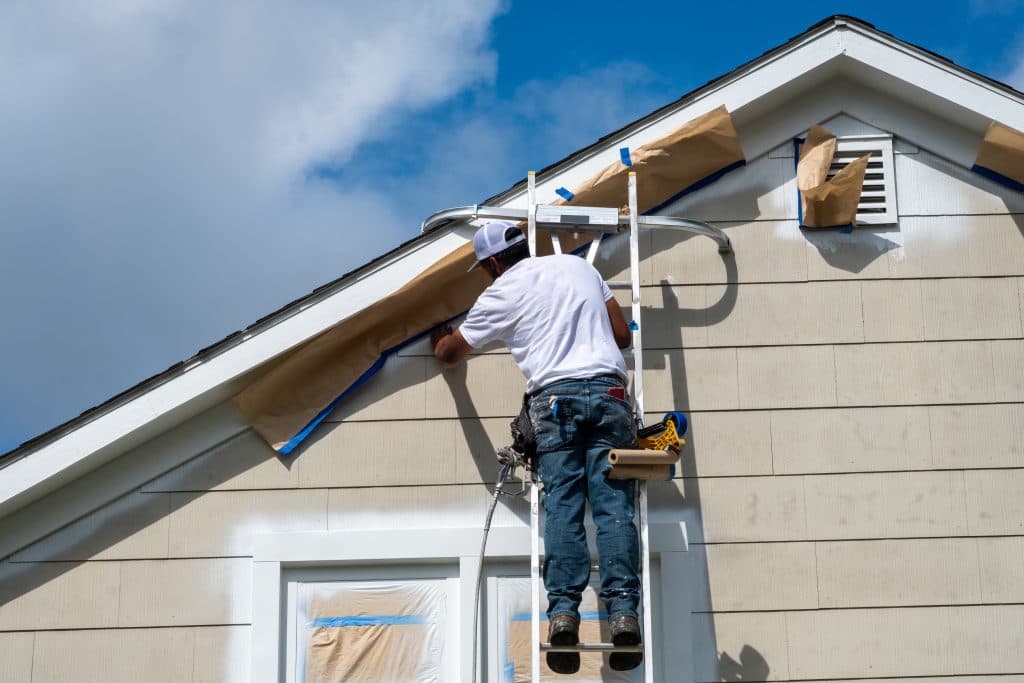
Most Arizona homeowners blame heat when their exterior paint starts failing. UV exposure and moisture cycling are doing most of the damage, and they work together in ways that are specific to Arizona’s desert climate. Sundance Roofing & Painting has spent 20+ years painting homes across Maricopa and Pinal Counties with Sherwin Williams products built to handle exactly these conditions.
Key Takeaways
- Phoenix averages just 7.22 inches of annual rainfall, per NOAA
- The EPA rates Phoenix’s summer UV Index at 10, the highest category
- Monsoon season runs June 15 through September 30, per NWS Phoenix
- Paint application windows depend on air temp, surface temp, and dew point, not just the season
- Arizona’s desert climate accelerates paint breakdown through UV degradation, thermal cycling, and concentrated moisture events
It’s Not Just Heat: What Arizona Weather Actually Does to Exterior Paint
Phoenix’s average summer UV Index is 10, the highest level on the EPA’s scale.
At UV Index 10, the highest category on the EPA’s UV Index scale, UV rays do far more than fade color. They break down the resins that hold paint together. Paint binders are made of polymer chains, long molecular structures that give a coating its flexibility and adhesion. High UV exposure snaps those chains apart over time.
The result is chalking, where the surface turns powdery as pigment separates from degraded binder. This process, called polymer chain degradation, is the leading cause of exterior paint failure in high-UV climates, per American Coatings Association research. Sun damage shows up first as fading, then progresses to chalking and adhesion loss as binder degradation continues.
National Weather Service climate normals show Phoenix averages just 7.22 inches of rainfall per year. That means your exterior painting bakes under relentless sun exposure for months with almost no moisture relief.
Then monsoon season arrives between June 15 and September 30, dumping concentrated rain onto coatings already weakened by months of UV and desert heat. Coatings must withstand UV degradation, sudden water intrusion, and constant expansion and contraction to maintain adhesion. Arizona’s climate tests all three at extreme levels, which directly impacts your paint’s lifespan.
5 Common Signs Arizona Weather Is Breaking Down Your Paint
These are the common signs that Arizona’s climate is actively degrading your exterior paint. Each symptom has a specific cause tied to conditions here, not generic wear. Most homeowners notice fading first, but the underlying damage often runs deeper.
- Chalky residue when you touch the surface: Arizona sun breaks down paint binders through polymer chain degradation. Once the binder fails, loose pigment sits on the surface as a powdery film.
- Fading and color loss, especially on south- and west-facing walls: Intense UV rays degrade pigments. Darker colors absorb more heat and fade faster under direct sun.
- Peeling or flaking paint: Adhesion failure from thermal cycling (hot days, cooler nights) combined with moisture infiltration during monsoon storms. Water gets behind the paint film and lifts it from the substrate.
- Cracks and large cracks in the coating: The paint film can’t flex with substrate expansion and contraction driven by Arizona’s temperature swings. Stucco and block walls are especially prone because they absorb and release more heat.
- Poor adhesion on a fresh coat: Often caused by painting over a chalked or improperly prepped surface. New paint can’t bond to degraded binder, so it peels within months.
Not all of these demand immediate action. Fading and light chalking are cosmetic issues that don’t threaten your home’s structure. Peeling, cracking, and exposed substrate are protective failures that leave your home exposed to Arizona’s monsoon moisture and extreme UV.
Once the coating no longer seals the surface, moisture reaches the wall material underneath. That’s when cosmetic wear becomes structural risk in Arizona’s climate. If you’re unsure which category your home falls into, our common painting questions page covers the most frequent scenarios.
Waiting too long to repaint after large cracks appear can allow water intrusion that damages the substrate beneath.
Why West-Facing Walls and Stucco Take the Worst Beating in Arizona
West-facing walls absorb afternoon sun when UV intensity and air temperatures are both at their daily peak. In Arizona, that means hours of direct sun and extreme heat hitting surfaces that are already hot from a full day of exposure. This one-two punch accelerates every failure mode: chalking, fading, cracking, and peeling all show up on west-facing walls years before they appear elsewhere on the same house.
Arizona homes have specific surface vulnerabilities that matter for how long paint lasts:
- Stucco (the dominant Arizona exterior): Porous by nature, stucco absorbs more heat and develops hairline cracks that allow monsoon moisture to penetrate behind the paint film
- Wood siding and wood trim: Less common in the desert but degrades faster under high UV exposure, requiring more frequent prep work and repainting
- North facing walls: Less UV damage, but they can trap moisture during monsoon season and develop mildew in shaded areas where surfaces stay damp longer
- Dust storms (haboobs): Abrade paint surfaces and embed fine particulates into the coating, weakening adhesion over time
Dust accumulation on stucco and other porous surfaces creates another layer of stress. Embedded dust particles act as abrasives during wind events and interfere with adhesion when you apply a new coat. If your house has west-facing stucco, it’s the first place to check for failure signs.
An exterior painting contractor in Chandler familiar with these patterns can assess which walls need attention first. Homes in open desert areas or near undeveloped land face higher dust exposure and may need more frequent cleaning before any painting project.
When to Schedule Exterior Painting in Arizona (and When to Wait)
The advice to “paint in spring or fall” is incomplete. What actually matters is whether conditions on the day of application meet manufacturer requirements for air temperature, surface temperature, humidity, and dew point. Here’s how Arizona’s two main windows compare:
| Factor | Shoulder Season (Oct-April) | Summer/Monsoon (June-Sept) |
|---|---|---|
| Air temperature range | Typically 50-90°F; within most manufacturer specs | Regularly exceeds 100°F; surface temps climb higher |
| Surface temperature risk | Low; surfaces cool overnight and stay within limits through morning | High; south- and west-facing walls can exceed product limits by mid-morning |
| Moisture/humidity risk | Low; dry, stable conditions most days | High; monsoon storms bring sudden humidity spikes and rain |
| Cure window reliability | Strong; consistent dry conditions allow paint to dry and cure fully | Unpredictable; afternoon storms can hit wet paint before it cures |
Manufacturer specs set the real boundaries. Behr requires air and surface temperatures between 35°F and 90°F for at least 4 hours after application, with the surface at least 5°F above the dew point. Benjamin Moore lists 35-100°F with low humidity and an optimal application temperature of 77°F.
Sherwin-Williams advises against painting immediately after rain, in foggy weather, or when surfaces are damp. The better approach is condition-based. Check air temp, surface temp, humidity, and dew point on the morning you plan to paint.
During cooler months, paint dries faster, you have wider application windows, and conditions stay more predictable. Summer months offer early morning windows on shaded walls if conditions stay within product limits. Monsoon season is the highest-risk window per NWS Phoenix monsoon guidance, but it’s not universally impossible.
Right prep and timing make all the difference between a coating that lasts 7 years and one that fails in three.
NOAA reports Phoenix averages just 33.4 days per year with measurable precipitation, which means roughly 332 days offer dry conditions suitable for exterior painting.
The real constraint isn’t finding a dry day. It’s finding a day where temperature, humidity, and surface conditions all align within manufacturer specs.
Proper surface cleaning through power washing and ideal conditions matter more than picking the right month. To see how surface preparation and proper timing come together on Arizona homes, browse our portfolio. When you’re ready to get your home assessed, schedule a free estimate with our team.
Frequently Asked Questions
How does Arizona weather affect exterior paint?
Arizona’s combination of extreme UV, low annual rainfall, and monsoon moisture cycling degrades exterior paint faster than heat alone.
Arizona’s climate attacks paint through three mechanisms working together. UV rays break down the polymer binders that hold paint to surfaces. Low rainfall means coatings bake under dry, high UV exposure for most of the year with no relief. Then monsoon season delivers concentrated moisture events that shock weakened coatings. This three-factor cycle is why paint in Arizona fails differently than in milder climates. Paint jobs that use products formulated for these specific conditions last longer.
What type of paint works best for the Arizona desert?
Exterior paints with high UV resistance and flexible acrylic binders hold up best in Arizona’s desert climate.
Choose 100% acrylic latex formulations rated for high UV exposure and thermal movement. These paints maintain flexibility as surfaces expand and contract through Arizona’s temperature swings, which reduces cracking and peeling. Sundance Roofing & Painting uses Sherwin Williams products formulated for these conditions across all painting services. High quality paint uses better-grade binders that resist sustained UV breakdown. When you choose colors for your home painting, lighter shades reflect more heat, so paint lasts longer than darker colors on west-facing walls.
How often should I paint my home’s exterior in Phoenix?
Most Phoenix homes need exterior repainting every 5 to 7 years, but wall orientation and prep quality shift that range significantly.
A fixed calendar isn’t the most reliable guide. Watch for chalky residue, visible fading, peeling, or cracks instead. West-facing stucco may need a fresh coat by year five, while sheltered walls can stretch past 7 years. Choosing the right paint matters as much as surface preparation and timing. A full repaint over a properly prepped surface protects your home’s curb appeal and lasts years longer than new paint over degraded binder. Sundance Roofing & Painting offers a free estimate to assess your home’s current condition. Tracking your last paint job helps you anticipate the next cycle.
Is it ever safe to paint during the summer?
Summer painting is possible in Arizona if air and surface temperatures stay within manufacturer limits and you avoid monsoon moisture.
Benjamin Moore specifies 35-100°F with low humidity, while Behr requires 35-90°F for at least 4 hours post-application. Early morning windows on shaded or north facing walls can meet these thresholds even in summer months. The real risk comes from monsoon season, which runs June 15 through September 30. Afternoon storms can arrive with little warning, and humidity spikes slow drying. Fresh paint may not cure properly if paint applied at the wrong time during monsoon season, leading to poor adhesion and early failure.
How does humidity impact painting in Phoenix?
Phoenix is dry most of the year, but monsoon-season humidity spikes slow paint drying and weaken adhesion on exterior surfaces.
Monsoon season runs June 15 through September 30, bringing sudden shifts from dry air to high humidity. The National Weather Service reports monsoon thunderstorm wind gusts in the Southwest almost always exceed 40 mph, which can drive dust into wet paint and stress curing coatings. High humidity lengthens dry time because moisture in the air prevents solvents from evaporating at the expected rate. Paint applied under these conditions may look dry on the surface while remaining soft underneath, which compromises adhesion and makes the coating vulnerable to peeling once conditions shift again.
Why do west-facing walls fail faster in Arizona?
West-facing walls absorb afternoon sun at peak UV intensity and surface temperature, accelerating every form of paint failure.
Afternoon sun hits west-facing walls when air temperatures are already at the daily maximum. Surface temperatures climb well above the ambient reading, pushing coatings past the thermal stress thresholds that cause cracking and adhesion loss. This sustained combination of UV and more heat is why west-facing stucco often shows chalking and fading years before east- or north-facing walls on the same house. Most homes in Arizona benefit from prioritizing west-facing walls during any repaint to protect the most vulnerable surfaces first. Homeowners in the Chandler area can get a wall-by-wall assessment from an exterior painting in Chandler specialist who understands these exposure patterns.
How soon after rain or dew can I paint my home?
Wait until the surface is completely dry and at least 5 degrees Fahrenheit above the dew point before applying any exterior paint.
Sherwin-Williams guidance is clear: do not paint immediately after rain, in foggy weather, or when temperatures are below 50°F. Behr specifies the surface must be at least 5°F above the dew point to ensure proper adhesion. In Arizona, post-monsoon mornings can leave dew on surfaces even when the day ahead looks clear and hot. Test surfaces by touch and with a moisture meter before starting. A new coat applied to a damp surface won’t bond properly, and you’ll see peeling within months.
Keep Reading
More Advice for Arizona Homeowners
Ready When You Are
Get Your Free Estimate
Free estimate. No pressure. Owner on every job — and you don’t pay a dollar until you’re satisfied.
Call (602) 690-8879Get a Free, No-Pressure Quote
Tell us about your project.
Roofing or painting — we’ll call you back within 24 hours to schedule your free on-site estimate.