Blog · January 14, 2026
How Arizona’s Sun, Heat, and Monsoons Affect Your Roof (And What to Do About It)
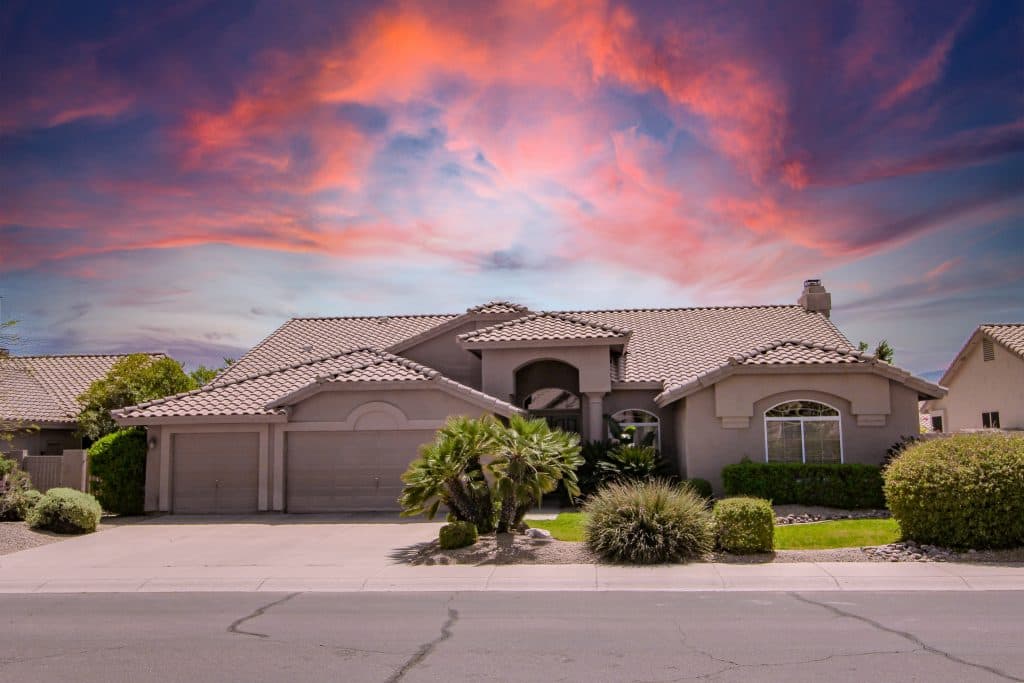
If you’ve ever walked outside in July and felt your driveway radiating heat through your shoes, you already know Arizona’s climate plays by its own rules. Now imagine what that same sun, heat, and seasonal monsoon weather is doing to your roof — twelve months a year, with no breaks. Arizona homes face a unique combination of stressors that homes in milder climates simply don’t deal with, and your roof bears the brunt of it.
Understanding how Arizona’s environment affects your roof can save you thousands in unexpected repairs, extend the life of your roofing system, and help you make smarter decisions when it’s time to replace or repair. Here’s what every Arizona homeowner should know.
UV Radiation: The Silent Roof Killer
Arizona averages over 300 days of sunshine a year — and that constant ultraviolet exposure is one of the most damaging things a roof can endure. UV rays break down the binding compounds in asphalt shingles, dry out wood underlayment, and slowly degrade the protective coatings on tile and metal roofs.
What you’ll see over time:
- Asphalt shingles becoming brittle, curling at the edges, or losing their granules
- Faded or chalky tile surfaces
- Cracked or peeling roof sealants around vents and flashings
- Foam roofs developing surface degradation if the protective coating isn’t maintained
What to do: Schedule annual roof inspections to catch UV damage early. Reflective roof coatings, lighter-colored materials, and well-maintained protective sealants all help slow the damage.
Extreme Heat and Thermal Cycling
Arizona summer roof surface temperatures can climb past 160°F. At night, temperatures can drop 30–40 degrees. That daily expansion and contraction — called thermal cycling — works on your roof like a slow crowbar. Over years, it loosens fasteners, opens up seams, cracks tiles, and stresses the underlayment beneath.
Foam roofs perform exceptionally well here because they expand and contract as a single bonded unit. Tile roofs handle the heat well too but rely heavily on the underlayment beneath them, which has a much shorter lifespan than the tile itself. If your tile roof is more than 15–20 years old, the underlayment likely needs attention even if the tile still looks fine.
Monsoon Season: Wind, Rain, and Hail in 90 Minutes
From mid-June through late September, Arizona’s monsoon season delivers the most concentrated weather damage your roof will see all year. We’re talking 50+ mph wind gusts, torrential downpours that overwhelm gutters, blowing dust that scours surfaces, and occasional hail that can dent metal roofs or crack tile.
Common monsoon damage:
- Lifted or blown-off asphalt shingles
- Cracked or shifted roof tiles
- Damaged flashing around chimneys, vents, and skylights
- Debris accumulation in valleys and gutters
- Water intrusion at weak points the dry weather had been hiding
The biggest mistake Arizona homeowners make? Assuming everything is fine because they don’t see water spots inside. Monsoon damage often takes months to show up indoors, by which point insulation is already ruined and structural wood may be compromised.
Dust, Debris, and Pollen Buildup
Less dramatic but constantly working against your roof: the fine layer of dust and debris that settles on every Arizona surface. On a roof, that buildup traps moisture against the surface during monsoons, clogs valleys and scuppers, and provides a foothold for moss and mold in shaded areas.
An annual cleaning combined with gutter clearing before monsoon season is one of the cheapest, highest-ROI things an Arizona homeowner can do for their roof.
What This Means for Your Maintenance Schedule
Roofs in Arizona simply don’t last as long as the manufacturer’s “30-year shingle” label suggests. A roof rated for 30 years in the Pacific Northwest might give you 18–22 years here. That’s not a defect — that’s the desert.
Building a maintenance routine around Arizona’s specific climate stressors is the single best way to protect your investment:
- Annual professional inspection — ideally every spring before monsoon season
- Post-monsoon inspection — after the first major storm of the year
- Gutter and valley cleaning twice a year
- Sealant and flashing checks every 2–3 years
- Underlayment evaluation at the 15-year mark for tile roofs
Get Ahead of Arizona’s Climate
The Arizona homeowners who get the most years out of their roofs are the ones who stop fighting the climate and start working with it — choosing the right materials for the desert, building a maintenance rhythm around the seasons, and catching small problems before they become five-figure repairs.
Keep Reading
More Advice for Arizona Homeowners
Ready When You Are
Get Your Free Estimate
Free estimate. No pressure. Owner on every job — and you don’t pay a dollar until you’re satisfied.
Call (602) 690-8879Get a Free, No-Pressure Quote
Tell us about your project.
Roofing or painting — we’ll call you back within 24 hours to schedule your free on-site estimate.