Blog · June 25, 2026
The Hidden Costs of DIY Roof Repair in Arizona: Why Professional Expertise Pays Off
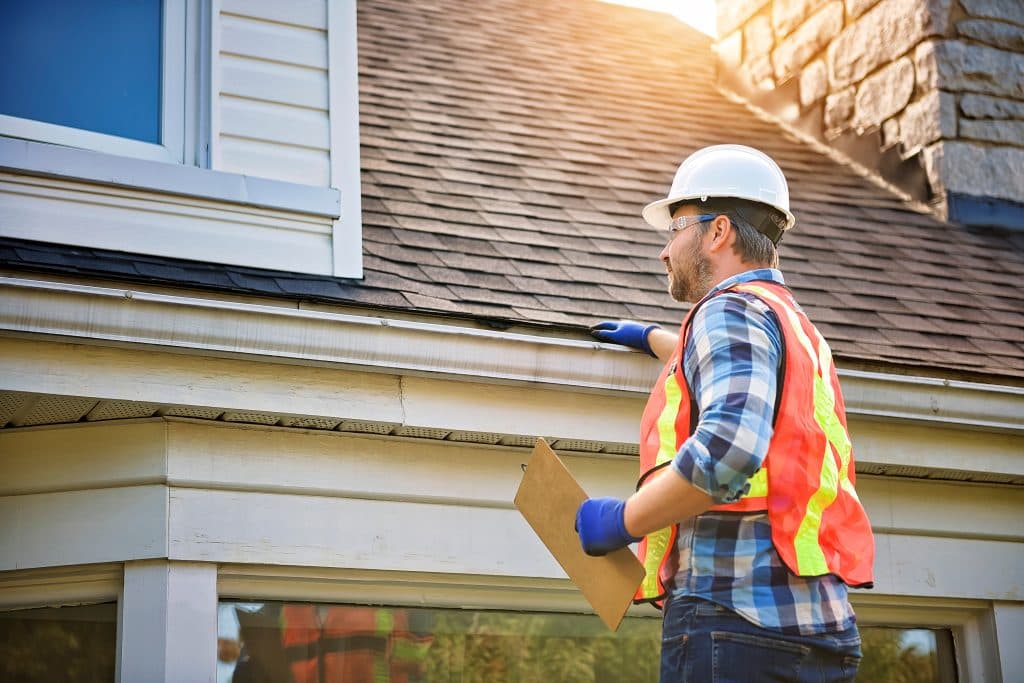
A tube of roof sealant costs $12 at Home Depot. A professional roof repair runs $400-$1,200. For many Arizona homeowners facing a small leak or a handful of lifted shingles, the math seems obvious: grab a ladder, watch a YouTube video, and save a thousand dollars. But that calculation ignores the real costs of DIY roof repair in Arizona’s extreme environment—costs that only become visible when the repair fails six months later, when you’re standing in an ER with a fall injury, or when your insurance company denies a storm damage claim because amateur work voided your roof warranty. Arizona’s combination of 160°F roof surface temperatures, 60 mph monsoon winds, and unforgiving UV creates failure modes that aren’t obvious to untrained eyes. A $12 tube of sealant applied incorrectly becomes a $8,000 interior water damage claim; a misdiagnosed “shingle problem” is actually a $15,000 underlayment failure that cosmetic patching only accelerates. This isn’t an argument against homeowner competence—it’s a recognition that Arizona roof systems operate at the edge of material limits where small mistakes cascade into expensive failures.
Key Takeaways
- DIY roof repairs void most manufacturer warranties in Arizona, because roofing materials installed in Phoenix’s extreme heat require specific application techniques and temperature windows—homeowner work rarely meets these standards, and manufacturers deny claims on DIY-modified roofs.
- Fall injuries from residential roofing are Arizona’s second-leading cause of homeowner ER visits during summer months, according to Arizona Department of Health Services data—the average fall from a single-story roof results in $47,000 in medical costs, and one in eight roofing falls causes permanent disability.
- Misdiagnosed roof problems cost 3-5x more to fix than the original issue: what appears to be “a few lifted shingles” is often symptom of failed underlayment, compromised decking, or thermal damage to fasteners—amateur repairs address the visible symptom while the underlying failure continues to spread.
- Professional roofing contractors carry liability insurance and provide workmanship warranties that cover hidden damage discovered during repair, material defects, and related issues—DIY repairs leave you financially exposed to cascading failures that won’t be evident for months or years.
Why Arizona Roofs Aren’t DIY-Friendly: The Climate Factor
In Seattle or Minneapolis, a competent homeowner with basic tools can execute simple roof repairs successfully. The materials are forgiving, temperatures are moderate, and failure modes are straightforward. Arizona is different. Here’s why:
- Roof surface temperatures exceed safe working conditions 4-5 months per year: From May through September, Phoenix metro roof surfaces hit 150-180°F on afternoons. At these temperatures, asphalt shingles become pliable and easily damaged by foot traffic, sealants don’t cure properly, and heat exhaustion risk is severe. Professional roofers in Chandler and Mesa work dawn-to-noon schedules during summer for safety—afternoon work is dangerous and produces substandard results.
- Material application windows are narrow: Most roofing sealants, adhesives, and coatings specify application temperatures of 40-90°F. Above 90°F, solvents flash off too quickly, preventing proper adhesion. Below 40°F (relevant in Flagstaff and Payson), materials don’t cure. Arizona’s temperature extremes leave short windows for successful DIY work—typically March-April and October-November. Homeowners attempting summer repairs or winter work in high country frequently produce repairs that fail within 6-12 months.
- UV degradation accelerates failure of incorrect materials: Arizona’s UV index peaks at 11+ in Phoenix metro summer—among the highest in the United States. Using the wrong sealant (non-UV-stabilized formulas), wrong fastener (bare steel screws rust within 2 years), or wrong underlayment (organic felt degrades in 5-7 years vs. 15-20 for synthetic) accelerates failure dramatically. Professionals use Arizona-specific materials engineered for extreme UV; DIYers typically use whatever the big box store stocks.
“The most expensive roof repairs we perform are fixing failed DIY attempts. Homeowners see a YouTube video showing how to replace shingles in Ohio and assume the process is identical in Phoenix. It’s not. Arizona’s heat requires different adhesives, installation sequences, and timing. We’ve seen $300 DIY shingle repairs turn into $8,000 decking replacements because the homeowner didn’t recognize that thermal damage had already compromised the nail base.” — National Roofing Contractors Association, Regional Best Practices Report, 2025
Arizona also has liability exposure DIYers rarely consider. If your amateur roof repair fails and water infiltrates your home, causing mold growth that sickens your family, you have no recourse. If a professional’s repair fails under identical circumstances, their liability insurance and workmanship warranty cover remediation. This risk transfer alone justifies professional repair costs for any but the most trivial issues.
The Fall Risk Reality: Arizona ER Data
Falling from roofs is the second most common cause of homeowner emergency room visits in Arizona during summer months (after heat stroke), according to Arizona Department of Health Services injury surveillance data. The statistics are sobering:
- Average fall height: 11 feet (typical single-story Arizona home eave height)
- Average medical cost for a roofing fall: $47,000 (ER visit, imaging, possible surgery, rehabilitation)
- Permanent disability rate: 12-15% of residential roofing falls result in permanent injury (spinal damage, traumatic brain injury, chronic pain)
- Fatality rate: Approximately 1 in 200 residential roofing falls in Arizona are fatal
Arizona’s heat adds compounding risk factors: dehydration and heat exhaustion cause dizziness and loss of coordination—the primary contributors to falls. Roof surfaces at 160°F burn exposed skin on contact, causing instinctive recoil that can lead to balance loss. And Phoenix metro’s low humidity means sweat evaporates rapidly, masking dehydration symptoms until they’re severe.
Professional roofing crews use fall protection equipment (harnesses, anchors, guardrails), work in teams so that heat exhaustion is monitored, and schedule work during cooler morning hours. The average homeowner has none of these safeguards. A $1,000 roof repair is a poor trade for a $50,000 medical bill and three months of disability leave from work.
The Hidden Cost Cascade: How Small DIY Repairs Become Large Failures
The most insidious cost of DIY roof repair is misdiagnosis. What looks like a simple problem to an untrained eye is often a symptom of deeper failure. Here are the most common misdiagnoses in Arizona:
Misdiagnosis #1: “I Just Need to Reseal a Few Shingles”
What you see: Three or four shingle tabs lifted along the roof edge after a monsoon storm.
What’s actually happening: Wind uplift during the storm revealed that the adhesive strip bonding shingles to each other has thermally degraded after 10+ years of Phoenix heat. The lifted shingles are symptomatic—dozens more are barely holding, and the next storm will strip them.
DIY response: Apply roofing cement under the lifted tabs and press them down.
Why it fails: Roofing cement is a temporary fix. It doesn’t address the systemic adhesive failure, and Phoenix heat causes the cement to soften and flow within 1-2 years. Meanwhile, wind-driven rain has infiltrated under the lifted shingles, saturating the underlayment. By the time you notice interior water stains 6-12 months later, the underlayment and possibly the decking have suffered water damage.
Professional response: Inspect the entire roof for adhesive failure, test shingle tabs across multiple zones, assess underlayment condition via moisture meter or thermal imaging, and recommend either targeted repairs (if limited to one area) or full roof replacement if systemic (which it often is on 12+ year roofs in Arizona heat).
Cost difference: DIY attempt costs $30-$50 in materials and produces a repair lasting 6-18 months. Professional diagnosis reveals a $12,000 roof replacement is needed within 2 years; you can budget accordingly and avoid emergency interior damage repairs. Attempting DIY first costs you 6-18 months of accelerating hidden damage.
Misdiagnosis #2: “I’ll Just Replace the Cracked Tiles”
What you see: Four or five cracked concrete roof tiles after a monsoon hailstorm.
What’s actually happening: The tiles cracked because hail impact exceeded the tile’s flexural strength—but the real question is why these tiles cracked while others didn’t. Often, the answer is that underlayment beneath has degraded, leaving the tiles without proper support. Or, tiles were improperly fastened (missing clips, wrong nails) and have been shifting for years, developing stress points that the hail exposed.
DIY response: Order replacement tiles, pull the cracked ones, and slide new tiles into place.
Why it fails: Replacing tiles without inspecting and addressing underlayment condition is cosmetic. If the underlayment is compromised (common on tile roofs 15+ years old in Arizona), water infiltrates through the gaps between tiles and soaks into the damaged underlayment. Within 12-24 months, you have interior leaks. Also, homeowners rarely have the right tiles—concrete tiles vary by manufacturer, profile, and color batch. Mismatched replacements are visually obvious and may not interlock properly, creating new leak paths.
Professional response: Lift surrounding tiles to inspect underlayment condition, assess whether the cracked tiles indicate systemic fastener failure, source exact-match replacement tiles (or document that close matches are best available), and provide a written warranty covering the repair and any hidden damage discovered during the work.
Cost difference: DIY tile replacement costs $100-$200. Professional repair costs $400-$800 but includes underlayment inspection and correct tile sourcing. If DIY repair misses underlayment damage, you face $3,000-$8,000 in interior water damage repair within 18 months. Sundance tile roof repair services include full diagnostic inspection—we won’t patch a tile if the real problem is hidden underneath.
Misdiagnosis #3: “The Flashing Just Needs New Sealant”
What you see: Cracked or missing sealant around chimney or vent flashing; maybe a small water stain on the ceiling nearby.
What’s actually happening: Flashing sealant cracks because thermal cycling has caused the metal flashing to expand and contract hundreds of times, stressing the sealant bond. The sealant failure is symptom; the underlying issue is that the flashing itself may have separated from the roof deck or vertical surface, or the flashing metal has corroded and developed pinholes.
DIY response: Scrape off old sealant, apply a bead of new silicone or roof cement, and call it done.
Why it fails: If the flashing metal has separated, new sealant is just covering a gap—water still infiltrates behind the flashing. If the metal has corroded, sealant won’t stop water from penetrating pinholes. And most homeowners use the wrong sealant: hardware-store silicone isn’t UV-stabilized for Arizona sun and fails within 2-3 years; standard roofing cement softens in Phoenix heat and flows away from vertical surfaces.
Professional response: Remove the flashing entirely, inspect the condition of the roof deck and wall surface beneath, replace corroded or damaged flashing metal, install new underlayment and ice-and-water shield (even though Arizona doesn’t get ice—it’s the best moisture barrier), reinstall flashing with mechanical fasteners and proper lapping sequence, and seal with commercial-grade, UV-stabilized polyurethane or silicone designed for Arizona conditions.
Cost difference: DIY sealant job costs $15-$30 and lasts 1-3 years before leaking resumes. Professional flashing replacement costs $400-$1,200 but solves the problem permanently (15-25 year lifespan). False economy: spending $30 every two years for a decade costs $150+ and you still have leaks. Spending $800 once eliminates the problem.
Warranty Voidance: The Expensive Fine Print
Most Arizona homeowners don’t realize that manufacturer warranties on roofing materials are voided by non-certified installation or repair work. If your roof is less than 15 years old and still under manufacturer warranty, DIY repairs can void that coverage.
Here’s how it works: When a professional roofing contractor installs a roof, they’re typically certified by the manufacturer (GAF, CertainTeed, Owens Corning for shingles; Boral, Eagle for tile; etc.). That certification means:
- The contractor has been trained in proper installation techniques for that specific product
- The manufacturer will honor material defect warranties (typically 25-50 years prorated)
- Some manufacturers offer extended “system warranties” covering both materials and labor if the entire roof system (shingles, underlayment, ventilation) uses their products and is installed by a certified contractor
If you perform DIY repairs on a roof under warranty, the manufacturer can (and often does) deny future warranty claims on the basis that “unauthorized modification” has compromised the system. We’ve seen this play out when homeowners attempt minor repairs, then discover 2-3 years later that the entire roof is failing due to a manufacturing defect (adhesive strip failure, granule loss, etc.). They file a warranty claim—denied because they DIY-repaired four shingles in 2023.
Professional roofing contractors also provide workmanship warranties (typically 5-10 years) covering installation quality. These warranties are transferable to new homeowners, adding resale value. DIY work provides no such protection. If you repair your roof yourself and sell the home two years later, the buyer’s inspector notes amateur repairs and flags them as potential issues—either killing the sale or forcing you to credit the buyer $5,000-$10,000 for “future roof concerns.”
Insurance Claim Complications
Arizona homeowners insurance covers “sudden and accidental” storm damage—a critical protection during monsoon season. But insurers increasingly scrutinize claims on roofs with visible DIY repairs, arguing that pre-existing deferred maintenance or amateur work contributed to the failure.
Example: Your roof suffers wind damage during a monsoon. The adjuster inspects and finds DIY-applied roofing cement at multiple locations. The adjuster argues that the cement repairs indicate prior damage that wasn’t properly addressed, and denies the claim—or reduces the payout by 40-60% for “depreciation and pre-existing conditions.”
Professional repairs come with invoices, material receipts, and contractor licensing documentation that prove the roof was maintained properly. This documentation strengthens insurance claims and often results in full-value payouts. DIY repairs leave you arguing with an adjuster who has leverage to deny or reduce your claim.
When DIY Roof Work Makes Sense (Rare, But It Exists)
To be clear: not all roof work requires a professional. There are limited scenarios where DIY makes sense in Arizona:
Acceptable DIY Roof Tasks
- Cleaning gutters and downspouts: No technical skill required, minimal fall risk if you use a stable ladder, and gutters clogged with palo verde debris can cause water backup that damages fascia.
- Clearing debris from flat roofs: If you have a foam or membrane flat roof and it accumulates leaves/dust, sweeping it off is simple maintenance. Just avoid walking on damaged areas.
- Applying reflective roof coating to a sound existing coating: If your foam or tile roof’s topcoat is showing wear but the underlying system is sound, applying a thin maintenance coat of elastomeric coating can extend lifespan 3-5 years. Use manufacturer-specified products, follow temperature and humidity guidelines strictly, and understand this is preventive maintenance, not repair.
- Sealing minor cracks in non-critical areas: A small crack in decorative fascia or trim (not structural flashing) can be sealed with appropriate caulk as a temporary measure.
Never DIY These Tasks
- Replacing shingles or tiles: Too many variables (underlayment condition, fastener type, adhesive selection, proper lapping) and too much risk of hidden damage.
- Flashing repairs: Flashing failures are the #1 source of roof leaks in Arizona; improper repair guarantees future water intrusion and interior damage.
- Flat roof membrane repairs: Requires specialized adhesives, primers, and techniques; amateur repairs fail within months.
- Roof structural repairs: Sagging, rot, or damaged decking requires proper load transfer and code-compliant fastening—DIY structural work is dangerous and often illegal without permits.
- Any work on roofs >15 years old: Older roofs have hidden vulnerabilities; amateur work accelerates failure.
If you’re uncertain whether a task is DIY-appropriate, the answer is no. The cost of professional assessment ($150-$300 for a thorough inspection) is trivial compared to the cost of fixing a failed DIY repair.
The Real Cost Comparison: DIY vs. Professional Over 5 Years
Let’s model two scenarios for a common Arizona roof issue: a dozen lifted shingles and minor flashing cracks on a 12-year-old asphalt shingle roof in Chandler.
Scenario A: DIY Approach
- Year 1: Homeowner applies roofing cement under lifted shingles, reseals flashing with hardware-store silicone. Cost: $50 materials + 4 hours labor. Repair holds for 10 months.
- Year 2: Shingles lift again after monsoon; new interior water stain appears. Homeowner reapplies cement, adds more silicone. Cost: $40 materials + 3 hours labor. Discovers ceiling drywall is stained; paints over it. Cost: $60 paint + 3 hours.
- Year 3: Multiple leaks during monsoon season. Homeowner realizes problem is beyond DIY ability, calls professional roofer. Inspection reveals underlayment failure and decking rot in two areas (water infiltrated through flashing gaps). Recommended solution: full roof replacement. Cost: $14,000.
- Total 3-year cost: $14,150 + ~10 hours labor + stress + multiple leak events + potential mold risk
Scenario B: Professional Approach (Year 1)
- Year 1: Homeowner calls Sundance Roofing for inspection after noticing lifted shingles. Inspection ($200) reveals widespread adhesive failure and compromised underlayment—roof is at end of service life. Homeowner schedules replacement for October (post-monsoon, pre-winter). Cost: $13,500 total.
- Years 2-5: No leaks, no stress, no emergency calls. Roof is warrantied for 10 years workmanship, 30 years materials.
- Total 5-year cost: $13,700 (inspection + replacement)
Net comparison: The DIY approach cost $450 more, required 10 hours of homeowner labor, involved multiple leak events and interior damage, and ended with emergency replacement anyway. The professional approach cost less, solved the problem permanently, and came with warranties.
The math is even more stark if the DIY approach causes a serious fall injury ($47,000 average medical cost) or fails to catch decking rot that escalates to mold remediation ($8,000-$15,000).
What to Look for in a Professional Arizona Roofing Contractor
If you’re convinced that professional repair is the right call, here’s how to choose a contractor who will deliver value:
Non-Negotiable Qualifications
- Arizona ROC (Registrar of Contractors) license: Every legitimate roofing contractor in Arizona must hold an active ROC license (KB-2 for residential roofing). Verify at azroc.gov. Unlicensed contractors void your insurance coverage and legal recourse if work fails.
- Liability insurance and workers’ comp: Ask for certificates of insurance. If an uninsured worker falls off your roof, you’re liable.
- Local references and completed projects: Ask for addresses of recent jobs in your city. Drive by and look at the quality. Call references and ask about communication, timeline, and whether issues were handled professionally.
- Written estimates with material specifications: Vague estimates (“replace shingles: $800”) are red flags. Legitimate contractors specify materials by manufacturer and product line, provide square footage calculations, and break down labor vs. materials.
Red Flags to Avoid
- Unsolicited door-to-door sales after storms: Legitimate Arizona contractors are too busy to cold-knock. Storm chasers appear after monsoons, take deposits, do substandard work, and disappear.
- Cash-only, no contract: This is tax evasion and leaves you zero recourse if work fails.
- Pressure to sign immediately: “This price is only good if you sign today” is a sales tactic, not a business practice. Reputable contractors provide estimates that remain valid for 30-60 days.
- Lowest bid by 30%+ compared to competitors: Either they’re using substandard materials, cutting corners, or planning to upsell once work begins.
Why Sundance Roofing’s Model Works
Sundance operates with owners on every job—not subcontracted crews. This means:
- The person who estimated your job is present during installation to ensure it matches the quote
- Quality control is direct, not delegated to a crew chief who may have different standards
- Communication is immediate—you’re talking to decision-makers, not intermediaries
- Accountability is personal—the owner’s reputation is on the line with every job
We serve Chandler, Mesa, Gilbert, Phoenix, Scottsdale, Tempe, Queen Creek, Casa Grande, and Northern Arizona (Payson, Flagstaff), and our teams understand the regional climate variations that affect material selection and installation techniques. A roof crew trained in Chandler’s low desert heat knows to avoid afternoon summer work and use Arizona-specific adhesives—details that matter for long-term performance. Get a free roof inspection and repair estimate to understand what your roof truly needs, not just what appears wrong from the ground.
Frequently Asked Questions
How much does a professional roof inspection cost in Arizona?
Professional roof inspections in Phoenix metro typically cost $150-$300 for a thorough assessment, including written report with photos, material condition evaluation, and lifespan estimate. Many contractors (including Sundance) offer free inspections if you proceed with recommended repairs—meaning the inspection cost is waived if you hire them for the work. Some contractors provide “free inspections” that are really sales calls in disguise; paid inspections from independent professionals deliver unbiased assessments.
Can I do my own roof inspection and just hire a pro for repairs?
You can perform a ground-level visual inspection with binoculars to spot obvious issues (missing shingles, displaced tiles, sagging areas). But the critical inspection points—flashing condition, underlayment moisture, fastener integrity, thermal damage—require roof access, specialized tools (moisture meters, thermal cameras), and experience distinguishing cosmetic wear from structural concerns. DIY inspection might catch 30-40% of problems; professional inspection catches 90%+. If you DIY-inspect and miss hidden damage, you’ll hire a pro for repairs that won’t solve the underlying issue.
What happens if I hire an unlicensed contractor to save money?
Using an unlicensed contractor in Arizona is illegal and exposes you to catastrophic risk. If their work fails, you have no legal recourse—the ROC (Registrar of Contractors) recovery fund doesn’t apply. If a worker is injured on your property, you’re liable because unlicensed contractors rarely carry workers’ comp. Your homeowners insurance may deny claims on roofs installed or repaired by unlicensed contractors. And unlicensed work doesn’t meet building codes, which can complicate future permits or home sales. The $500-$1,000 you “save” using an unlicensed contractor becomes $10,000-$20,000 in liability when something goes wrong—and it often does.
Are there any roof repairs I can safely do myself in Arizona?
Very limited scenarios: clearing debris from gutters or flat roofs (if you can do so safely from a ladder or ground level), applying a thin maintenance coat of elastomeric coating to a sound existing coating (following manufacturer specs strictly), and sealing minor cracks in non-structural trim. Everything else—shingle/tile replacement, flashing repair, membrane work, structural repairs—requires professional expertise to execute correctly in Arizona’s extreme climate. The risk-reward ratio for DIY doesn’t favor homeowners.
How can I tell if a contractor is trying to upsell me on unnecessary work?
Get multiple estimates from licensed contractors (3-4 is ideal). If three contractors say your roof needs replacement and one says a $400 repair will solve it, either the low bidder missed something or the others are upselling. Conversely, if three say repair is adequate and one pushes replacement, they’re likely upselling. Ask contractors to explain the why, not just the what—legitimate contractors will show you (via photos or roof access) why they’re recommending specific work. They’ll also provide a range of options: “You could repair for 2-3 years of life, or replace now and get 20-25 years.” Upsellers push only the most expensive option. Sundance’s approach: we’ll tell you what your roof needs and what it doesn’t, and let you decide based on budget and timeline.
Does homeowners insurance cover DIY roof repair mistakes?
No. Homeowners insurance covers “sudden and accidental” damage (storms, fires, falling trees), not gradual damage from poor maintenance or faulty DIY work. If you DIY-repair your roof and it fails, causing interior water damage, your insurer will likely deny the claim, arguing that the damage resulted from improper repair (a maintenance issue, not a covered peril). They may even deny future storm-damage claims on the basis that DIY work voided the roof’s integrity. Professional repairs come with liability insurance that covers mistakes—DIY leaves you fully exposed.
What should I do if I’ve already attempted DIY repairs and now have bigger problems?
Call a professional immediately for a comprehensive inspection. Be honest about what you attempted—hiding DIY work wastes diagnostic time and can lead to incomplete repairs. A good contractor will assess the current state without judgment and recommend solutions. In some cases, DIY work can be corrected without major cost; in others, the roof may need partial or full replacement. The longer you wait, the more expensive the fix becomes as hidden damage (moisture infiltration, decking rot) spreads. Sundance has repaired hundreds of failed DIY attempts—we’re not interested in shaming homeowners, just solving the problem correctly. Contact us for an honest assessment of where your roof stands after DIY work.
Keep Reading
More Advice for Arizona Homeowners
Ready When You Are
Get Your Free Estimate
Free estimate. No pressure. Owner on every job — and you don’t pay a dollar until you’re satisfied.
Call (602) 690-8879Get a Free, No-Pressure Quote
Tell us about your project.
Roofing or painting — we’ll call you back within 24 hours to schedule your free on-site estimate.