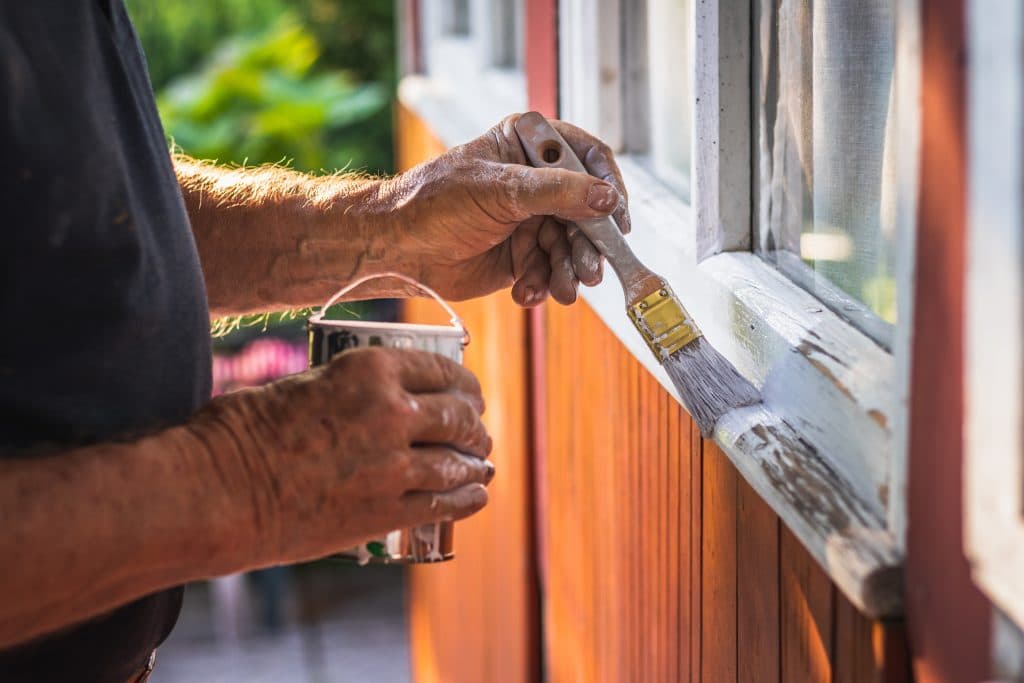
The best exterior paints for your home’s exterior aren’t determined by brand name. They’re a system: the right resin chemistry matched to your wall substrate, paired with a color strategy that actually reduces heat gain. Sundance Roofing & Painting has spent 20+ years painting Arizona homes with Sherwin Williams, Benjamin Moore, and other proven acrylic systems, and the pattern is clear: homeowners who choose based on chemistry and surface fit get results that outlast those who chase labels.
Key Takeaways
- Reflective wall coatings can cut annual HVAC costs up to 27% in hot climates, per Lawrence Berkeley National Laboratory research
- Top-rated exterior paints resist cracking and fading for 9+ years, according to Consumer Reports’ 2026 testing
- Cool-color pigments let darker shades reflect significantly more heat than conventional dark paint
- Substrate type (stucco, wood, fiber cement) determines whether acrylic or elastomeric fits best
What Makes Exterior Paint Last in Hot, Dry Climates
Oil-based exterior house paint held the durability crown for decades. That era is over. Current top-performing lines from Behr, Benjamin Moore Aura, and Valspar all position 100% acrylic paints as their flagship exterior products, and the reason is straightforward: acrylic resin flexes with temperature swings instead of cracking, releases moisture instead of trapping it behind the film, and resists fading under intense UV rays far longer than oil-based alternatives.
If you still hear that oil is “tougher,” that advice predates the chemistry that replaced it. For answers to other outdated claims, see our common painting questions.
No single lab test fully predicts how an exterior paint will perform on your wall. The American Coatings Association notes that real-world durability depends on the interaction between adhesion, elasticity, and water resistance, not any one property in isolation.
That means the label matters more than the brand. Look for these properties when comparing the best exterior paints:
- UV resistance rated for desert-level solar exposure
- Breathability that lets moisture escape through the film
- Crack resistance across wide temperature swings (40°F nights to 115°F+ afternoons)
- Mildew resistant paint formulations even in low-humidity conditions where irrigation splash zones stay damp
- Strong adhesion to your specific substrate after proper primer application
Consumer Reports says the exterior paints it recommends resist fading, cracking, dirt, and mildew for nine years or more, per Consumer Reports’ 2026 exterior paint testing. That benchmark gives you a concrete floor: any paint system that can’t meet it isn’t worth the cost in desert heat.
Proper preparation protects your investment. Power washing removes dirt and chalked residue, sanding smooths damaged areas, and priming seals bare wood, metal, and patched stucco before the finish coat goes on. These steps prevent peeling and early failure on siding and other exterior surfaces.
Skipping the priming step on bare or patched areas is the fastest path to adhesion failure and peeling within the first year. Color choice affects durability too, but not the way most homeowners assume.
How Exterior Paint Color Affects Heat, Energy, and Durability
According to the Lawrence Berkeley National Laboratory, cool walls can reduce annual HVAC energy costs by up to 27%. That figure reframes exterior paint colors from a curb appeal decision into a measurable performance choice, and it applies directly to Arizona homes baking under direct sunlight eight months a year.
Light Colors and Reflectance
Lighter colors reflect more sunlight and absorb less heat. A white or light-tan wall can stay 50°F+ cooler at the surface than a dark wall in the same sun exposure.
That lower surface temperature means less heat conducting through the wall into your living space, which means your HVAC system runs less to keep your home cooler. The savings depend on wall orientation and shade coverage, not just the paint color alone.
South- and west-facing walls in full sun deliver the largest temperature reduction from high-reflectance colors. Walls shaded by trees or neighboring structures see smaller gains. For homeowners prioritizing maximum energy savings and lower surface temperatures, a light, high-reflectance conventional color is the strongest play.
Pairing that color choice with the right exterior painting system protects the investment for years and can help you save money on cooling costs.
Cool-Color Pigments for Darker Shades
Not every homeowner wants a light-colored house. HOA requirements, architectural style, and personal preference often push toward darker shades. Conventional dark pigments absorb most solar energy and convert it to heat.
Cool-color pigments change that equation. The Lawrence Berkeley National Laboratory reports that about half of solar radiation arrives as near-infrared light, invisible to the human eye but responsible for a large share of heat gain on your walls. Cool-color pigments reflect this near-infrared energy while still appearing dark to the eye.
The result: a cool-color dark wall achieves surface reflectance (how much sunlight a wall bounces back) roughly halfway between a conventional dark wall and a light wall. That’s a meaningful reduction in heat absorption for homeowners who want a darker look without the full thermal penalty of conventional dark paint. Warm tones like terracotta and desert beige also benefit from cool-color technology when formulated with reflective pigments.
Fading resistance matters just as much as heat reflection when choosing darker colors. UV exposure breaks down conventional dark pigments faster than light ones, causing visible color shift within three to five years. Cool-color formulations resist fading longer because they reflect the UV wavelengths that degrade standard pigments.
Acrylic vs Elastomeric: Matching Paint to Your Home’s Surface
Your wall substrate should drive the acrylic-vs-elastomeric decision, not brand loyalty or a contractor’s default preference. Both are acrylic-based, but they solve different problems. The comparison below maps each chemistry to the surfaces where it performs best in hot, dry climate conditions and humid climates.
| Factor | 100% Acrylic | Elastomeric Coating |
|---|---|---|
| Best substrate fit | Wood, fiber cement, trim, smooth stucco | Masonry, textured stucco with hairline cracks |
| Crack-bridging | Limited; flexes with minor movement | Strong; bridges hairline cracks up to 1/16″ |
| Breathability | High; releases moisture through the film | Lower; thicker film can trap moisture |
| Recoat ease | Straightforward; accepts multiple coats | Requires careful prep between coats |
| Best use case | Most Arizona repaints; UV and fade resistance | Stucco waterproofing; crack-prone masonry |
For most Arizona homes with wood siding, fiber cement, or stucco in stable condition, 100% acrylic is the right paint choice. It handles the climate’s extreme UV, breathes well in dry heat, and recoats cleanly when it’s time for a fresh coat.
Elastomeric wins on older masonry or stucco walls showing hairline cracking, where its thicker film seals and waterproofs the surface. Misapplying elastomeric on a substrate that needs breathability can trap moisture behind the wall, creating worse problems than the cracks it was meant to fix. An exterior painting contractor in Chandler can assess your specific surface and recommend the right system.
Most acrylic systems require two coats for full coverage and durability, while elastomeric applications may need only one thick coat on properly prepared surfaces. Climate conditions beyond Arizona also matter when selecting paint chemistry. Hot and humid climates require formulations that resist mold growth and handle moisture differently than dry desert environments.
Humid weather accelerates mildew formation, so paints rated for humid climates include stronger antimicrobial additives than those designed solely for arid regions. Cost differences between acrylic and elastomeric systems reflect both material price and labor.
Elastomeric coatings typically cost 30–50% more per gallon than premium acrylic paints, and their thicker application requires more product per square foot. For homeowners weighing upfront cost against long-term performance, acrylic delivers better value on most substrates unless crack-bridging is specifically needed.
Prep Steps That Protect a Desert Paint Job
Desert conditions create prep challenges that don’t exist in temperate climates. Skipping these steps is the fastest way to watch a paint job peel within three years.
- Power wash stucco to remove dirt, alkali, and mineral deposits that form when Arizona’s hard water and intense UV break down older coatings
- Sanding chalked surfaces back to solid substrate, because new paint won’t bond to the powdery residue UV degradation leaves behind
- Fill stucco cracks and repair damaged areas before coating, so the new film has a stable surface instead of bridging over movement
- Prime all bare substrates and patched areas with a primer rated for alkaline surfaces common in desert masonry
- Time application for early morning or late afternoon when wall surface temperatures drop below the paint manufacturer’s maximum, typically 90°F to 100°F
These steps matter because, as the American Coatings Association notes, no single paint property predicts exterior performance. Adhesion and water resistance in the field depend on what’s underneath the paint.
Proper priming creates the bond between substrate and topcoat that prevents early peeling and extends the life of your finish. Windy conditions can carry dust onto wet paint, so scheduling around weather forecasts protects the finish. On textured stucco, brushes and rollers build better film thickness than spraying alone, reducing thin spots that crack under UV stress.
Sundance Roofing & Painting starts every project with a free on-site assessment that identifies these substrate-specific issues before a brush touches the wall. You can schedule a free estimate to find out exactly what your home needs.
Frequently Asked Questions
What type of exterior paint lasts best in hot, dry climates?
A 100% acrylic exterior paint system matched to your substrate is the current durability standard for desert homes.
Look for “100% acrylic” on the label as your baseline. Consumer Reports’ recommended exterior paints meet a nine-year-plus benchmark for resisting cracking, fading, dirt, and mildew. Sherwin Williams Duration and Benjamin Moore Aura both offer formulations designed for extreme climates. Sundance Roofing & Painting can help you match the right product to your wall type through our painting services.
Is 100% acrylic paint better than elastomeric for desert homes?
Acrylic wins on most substrates for repainting, but elastomeric is the better coat for cracked masonry and stucco needing waterproofing.
The key risk with elastomeric is misapplication. Its thicker film can trap moisture behind stucco if applied to a wall that needs breathability rather than sealing. An exterior painting contractor in Florence can evaluate whether your surface needs crack-bridging or standard acrylic protection.
Do lighter exterior paint colors really keep a house cooler?
Lighter colors reflect more sunlight and reduce surface heat, which can meaningfully lower cooling costs on sun-exposed walls.
The degree of savings depends on wall orientation and shade coverage, not color alone. A south-facing stucco wall in full sun benefits far more from a high-reflectance color than a north-facing wall shaded by trees. Homeowners with heavy sun exposure on two or more walls see the largest impact over three years or more of continuous use.
Can you use dark exterior paint in a hot climate?
Cool-color pigments let you use darker shades while reflecting significantly more heat than conventional dark paint.
These pigments reflect near-infrared energy that’s invisible to the eye but responsible for much of the heat gain on your walls. HOA requirements and design preferences often drive darker color choices, and cool-color options exist specifically for homeowners who want that look without the full thermal penalty.
What sheen is best for stucco in hot, dry weather?
Satin or low-luster finishes balance dirt resistance with the ability to hide surface imperfections common on textured stucco.
Flat finishes hide texture best but pick up more dirt in dusty desert conditions, requiring more frequent cleaning. Satin resists dust and washes more easily while still softening the look of stucco’s natural unevenness. Sundance can recommend the right sheen during an exterior painting in Chandler consultation.
Is oil-based exterior paint still the best choice outdoors?
Modern 100% acrylic systems outperform oil-based paint for UV resistance, breathability, and flexibility across desert temperature swings.
Oil-based exterior paints become brittle in extreme heat and crack as substrates expand and contract. They also release higher VOC levels, and EPA regulations have reduced oil-based options in many areas. Acrylic technology has closed every performance gap that once made oil the durable choice for outdoor use.
What is a cool wall paint?
Cool wall paint uses pigments engineered to reflect near-infrared solar energy, reducing heat absorption while maintaining the visible color you choose.
Lawrence Berkeley National Laboratory found that a majority of tested wall materials lost only about 0.00 to 0.05 in surface reflectance after 24 months of California exposure and 12 months at U.S. sites including Phoenix. That durability means the heat-reduction benefit holds up over time rather than degrading after a few seasons of sun exposure. Rain and humidity don’t significantly reduce a cool wall’s ability to reflect heat when the system is properly applied.
Does the best exterior paint for hot dry climates work in other environments?
The best exterior paint for hot dry climates uses formulations optimized for UV resistance and low humidity, which may not perform as well in regions with frequent rain or high moisture levels.
Paints designed for hot and humid climates include stronger mildew resistance and moisture-handling properties than those formulated solely for desert conditions. If you’re painting a home that experiences both dry heat and seasonal humidity, look for products rated for mixed-climate performance or consult with a local exterior painting contractor who understands regional weather patterns.
Keep Reading
More Advice for Arizona Homeowners
Ready When You Are
Get Your Free Estimate
Free estimate. No pressure. Owner on every job — and you don’t pay a dollar until you’re satisfied.
Call (602) 690-8879Get a Free, No-Pressure Quote
Tell us about your project.
Roofing or painting — we’ll call you back within 24 hours to schedule your free on-site estimate.